



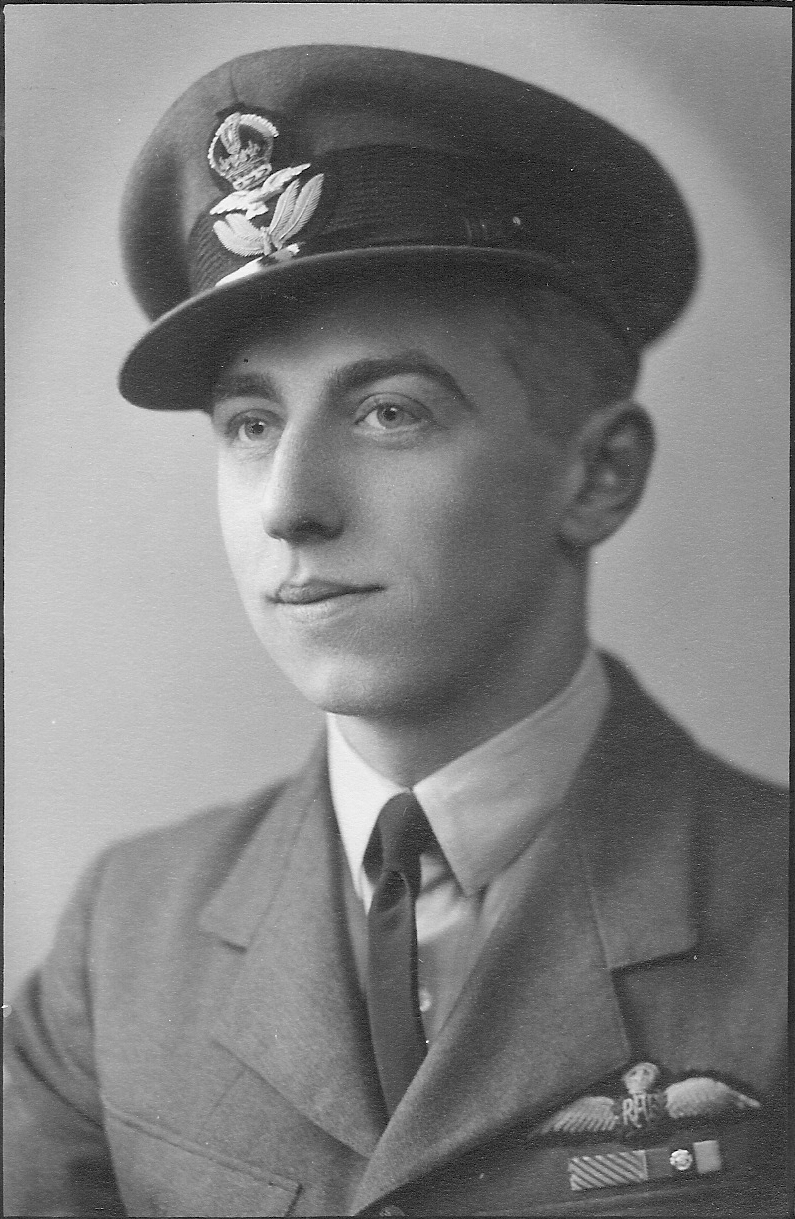
Frederick John Parkinson
This story and photos are shared with the Trust with kind permission from Ian Parkinson, nephew of Frederick John Parkinson.
Frederick John Parkinson was born on the 27 November 1922, the son of John Frederick and Ethel Parkinson. He was educated at Manchester Grammar School and was academic with a love of sport. During this time John developed a keen interest in flying, reading aircraft magazines and even going on a pleasure flight unbeknown to his parents.
In 1938, on leaving school, John went into the family business, working as an Apprentice Light Clothing Trade. At the outbreak of war he joined the RAF Volunteer Reserve and was enlisted into the RAF in late 1940. In May 1942 after training, John was posted to 125 night fighter squadron flying the Bristol Beaufighter at Fairwood Common, Swansea. After 5 months he was then posted to 600 Squadron, and was joined by Arthur John "Nobby" Clark as his navigator. Known as Nobby in the Squadron the CWGC records state that he came from Ealing, Middlesex, the son of Frederick and Vera Clark. Nobby Clark had been posted to 125 from 604 Squadron. Like John, he was posted to 600 Squadron where they became a crew together after about 6 months.
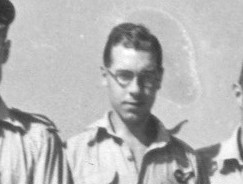
Nobby Clark, who served as crew member with John Parkinson
600 Squadron was another night fighter unit, also flying the Beaufighter, as they prepared to be posted to North Africa in support of the allied landings there. This period of John’s service was very hectic as the squadron patrolled the night skies over the land and sea. Whilst on patrol from Algeria, John encountered an enemy aircraft off the east coast of Sardinia and after an engagement lasting 35 minutes and despite running low on fuel, he shot it down, earning him the DFM. The citation, taken form the DFM Register, stated:
" This N.C.O. was on dawn patrol off Sardinia on 24th April, when returning at a considerable distance out to sea, he saw an emeny aircraft approaching him head-on in the early light of dawn. He has a running fight with this aircraft for approximately 35 minutes and, though he was superior in speeed to the enemy aircraft, the latter was able to turn inside him during the combat. During the 35 minute action, the enemy took violent evasive action. Only as a result of great determination and very accurate deflection shooting did Sergeant Parkinson eventually shoot down the enemy aircraft into the sea. In the course of the combat when the aircraft were approaching each other head-on, this N.C.O. pilot refused to give way and eventually forced his adversary to do so but so late that the aircraft in passing nearly collided and the enemy was forced to lift his wing over that of Sergeant Parkinson's aircraft. After the combat, he flew for a long distance before reaching land and eventually landed at his Base with 10 gallons of pertrol in each tank. This airman has show admirable war-like qualities and devotion to duty."
The squadron then continued operations from Malta, Sicily and then Salerno, Italy.

Group photo of 600 Squadron taken after their 100th enemy aircraft was shot down. John sits in the front row, third from the right, Nobby stands back row, 5th from the right
In late 1943 John finally returned to the UK and after promotion to Pilot Officer and conversion to the De Havilland Mosquito Fighter Bomber, he was posted to 151 Squadron at Predannack in Cornwall. Nobby Clark was posted with him as his navigator. It was from here that he flew a number of low level attacks on railway targets in France, strafing with cannon fire and dropping 500lb bombs.
On August 16th, 1944 John led a 2-aircraft strafing attack on the railway goods yards at Poitiers. Possibly due to the importance of this railway line for bringing up reinforcements to the Battle of Normandy and the amount of times it had been attacked by the RAF, Poitiers was defended by anti-aircraft guns of the SS Kriegsmarine. Sadly, John’s Mosquito was hit. Flying at low level and high speed, eyewitnesses said that smoke was pouring from an engine and despite a number of attempts, John finally lost his fight to gain altitude, crashing near the village of Beruges. Members of the local resistance removed the bodies of John and his navigator and friend, PO "Nobby" Clark, before the Germans arrived. They are buried next to each other in the village cemetery and the area outside the gates is named after them in their honour.
FALLEN HEROES
FREDERICK JOHN PARKINSON
Royal Air Force • PILOT OFFICER
Royal Air Force Volunteer Reserve
151 Squadron, Royal Air ForceDIED | 16 August 1944
AGE | 21
SERVICE NO. | 175717
FALLEN HEROES
FREDERICK JOHN PARKINSON
Royal Air Force • PILOT OFFICER
Royal Air Force Volunteer Reserve
151 Squadron, Royal Air ForceDIED | 16 August 1944
AGE | 21
SERVICE NO. | 175717