



David Cornfoot Brown
This story is shared by the Trust with kind permission from Pete Colley, Curator, Wickenby Museum. Additional information and photo from the WWII Records and Service Files of War Dead, Libraries and Archives, Canada
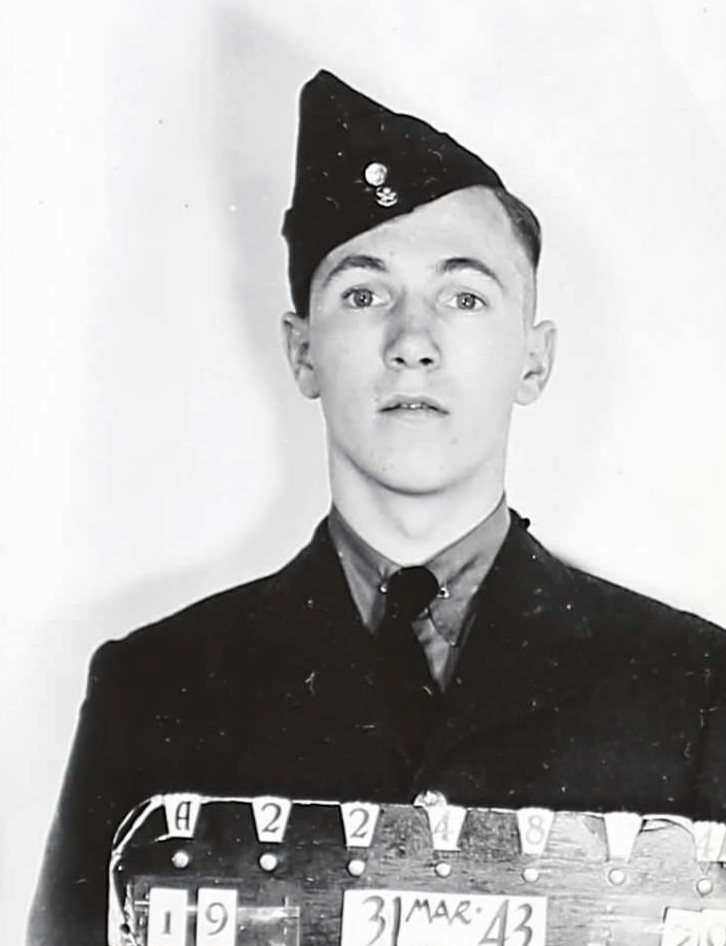
Remembering David Cornfoot Brown, Pilot Officer, air gunner, Royal Canadian Air Force (RCAF), aged 20, son of David and Annie Brown, of Hamilton, Ontario, Canada who had married in Edinburgh on the 28th September 1923. He was born in Edinburgh, Scotland on the 14th April 1924. His father had emigrated to Canada where he worked as a Machinist. His mother was a Canadian who was born in New York. He had one brother, Thomas, and two sisters, Shirley and Patricia. The schools he attended were the Public School, Hamilton and Westdale Technical College, Hamilton and His sports interests were hockey and football. After he left school he worked as a Time Keeper for Canadian Westinghouse, Hamilton from 1940 until he joined up in 1943
He enlisted in the RCAF on 29 March 1943 and after initial training he embarked from Halifax for the U.K. on 24th November 1943. He arrived at 3 RCAF PRC on 12nd December 1943, No 83 OTU on the 21 December, No 11 Base on 30th March 1944 and finally 626 Squadron on the 8th May 1944. Whilst at 83 OTU his Senior Gunnery Leader wrote that he was "An average Air Gunner who, with a little more experience will be above average. A keen and conscientious type"
He was killed on his 7th mission attacking Vierzon when his aircraft crashed at Theillay (Loire-et-Cher), a village just to the west of the rail link between Salbris and Vierzon, the latter being in the neighbouring Department of Cher. At first the cause of loss was not established but investigations in 1945 revealed what had happened.
Flight Sgt Hammond was one of three crew members who survived the crash as he was able to bail out of the aircraft. He had been taken to Orleans Hospital and then a hospital in Paris for treatment of his wounds so was lucky not not to be made a POW like the other two crew members. On his return to the UK he filed a report about what had happened and details were sent to David's parents on the 1st March 1945.
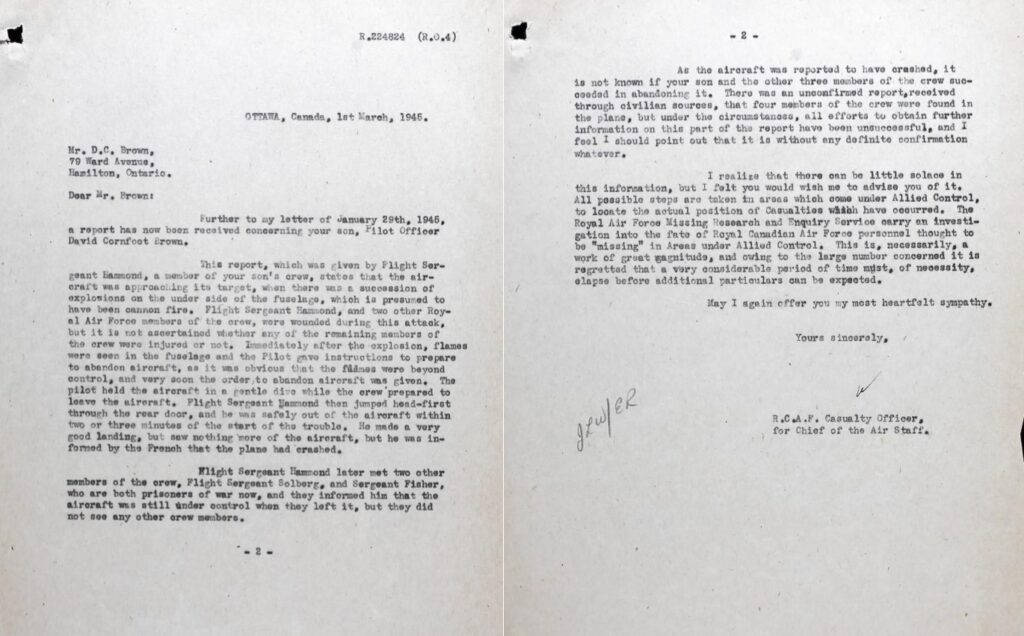

"..the aircraft was approaching its target, when there was a succession of explosions on the under side of the fuselage, which is presumed to have been cannon fire. Flight Sergeant Hammond, and two other Royal Air Force members of the crew were wounded during this attack, but it is not ascertained whether any of the remaining members of the crew were injured or not. Immediately after the explosion, flames were seen in the fuselage and the Pilot gave instructions to prepare to abandon aircraft, as it was obvious that the flames were beyond control, and very soon the order to abandon aircraft was given. The pilot held the aircraft in a gentle dive while the crew prepared to leave the aircraft. Flight Sergeant Hammond then jumped head-first throught the rear door, and was safely out of the aircraft whithin two or three minutes of the start of the trouble. He made a very good landing, but saw nothing more of the aircaft, but he was informed by the French that the aircraft had crashed."
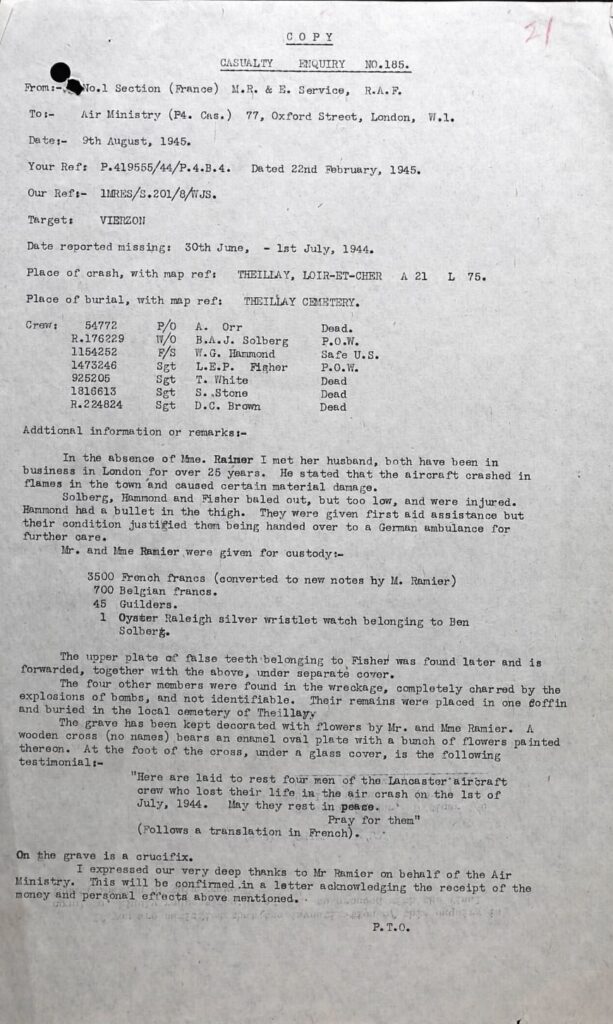
Confirmation of the fate of the four remaining crew members took a bit longer to be revealed. A casualty enquiry form was completed by No 1 Section (France) and sent to the Air Ministry on the 9th August 1945. They had spoken with M. Ramier who had witnessed the crash with his wife. He said that they had given assistance to the three crew members, Flight Sgt Solberg, Flight Sgt Hammond and Sgt Fisher, who had bailed out but had to hand them over to a German ambulance due to their injuries. Before they were taken away the men gave them custody of some Franch and Belgian Francs, Dutch Guilders and a silver wristlet that belonged to WO Solberg. M. and Mme Rainer later found the upper plate of the false teeth which Fisher had lost after bailing out which they kept with the belongings. They also said what had happened to the crew members who had been killed:
"The four other members of the crew were found in the wreckage, completely charred by the explosions of bombs, and not identifiable. Their remains were placed in one coffin and buried in the local cemetery of Theillay.
The grave has been kept decorated by M. and Mme Ramier. A wooden cross (no names) bears an enamel oval plate with a bunch of flowers painted thereon. At the foot of the cross, under a glass cover, is the following testimonial:-
"Here are laid to rest four men of the Lancaster aircraft crew who lost their life in the air crash on the 1st of July, 1994. May they rest in peace." "
FALLEN HEROES
DAVID CORNFOOT BROWN
Royal Air Force • PILOT OFFICER
Royal Canadian Air Force
626 Squadron, Royal Air ForceDIED | 01 July 1944
AGE | 20
SERVICE NO. | J/89961
FALLEN HEROES
DAVID CORNFOOT BROWN
Royal Air Force • PILOT OFFICER
Royal Canadian Air Force
626 Squadron, Royal Air ForceDIED | 01 July 1944
AGE | 20
SERVICE NO. | J/89961
FEATURED SHOP ITEM
£25
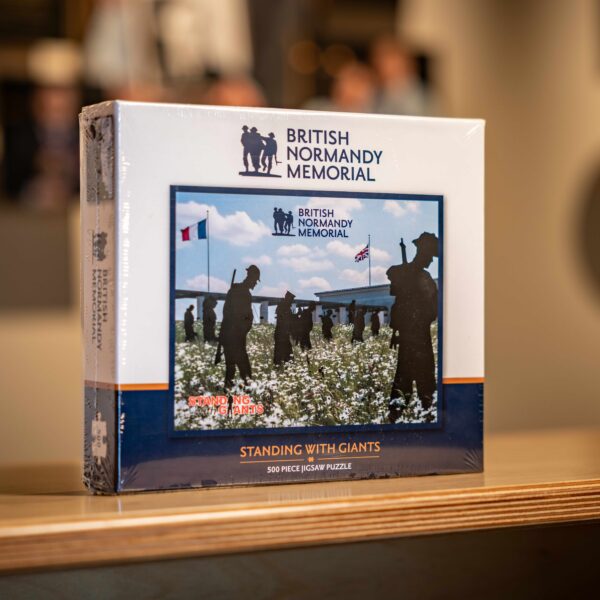
ORDERStanding with Giants Puzzle
Bring a powerful moment of remembrance into your home with our Standing with Giants 500-piece jigsaw puzzle. Featuring the striking silhouettes installation at the British Normandy Memorial, this beautifully produced puzzle captures the scale and emotion of the tribute.
£22
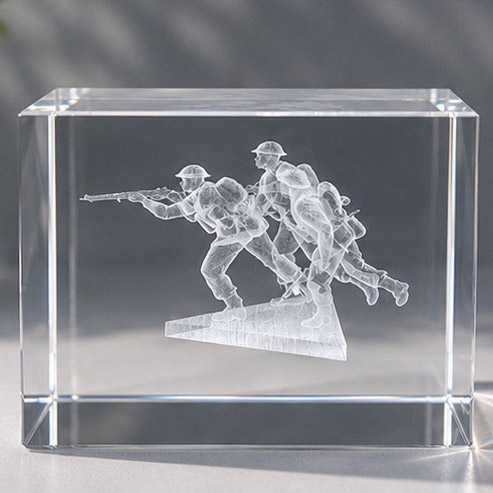
ORDERD-Day Sculpture Crystal Block
Laser-engraved within a solid crystal block, the detailed three-dimensional image can be viewed from different angles, creating a striking display piece.

£16.99
ORDERNorman D. Mouse & Book Gift Set
Meet Norman D. Mouse, the little mouse with a very big story to tell!