



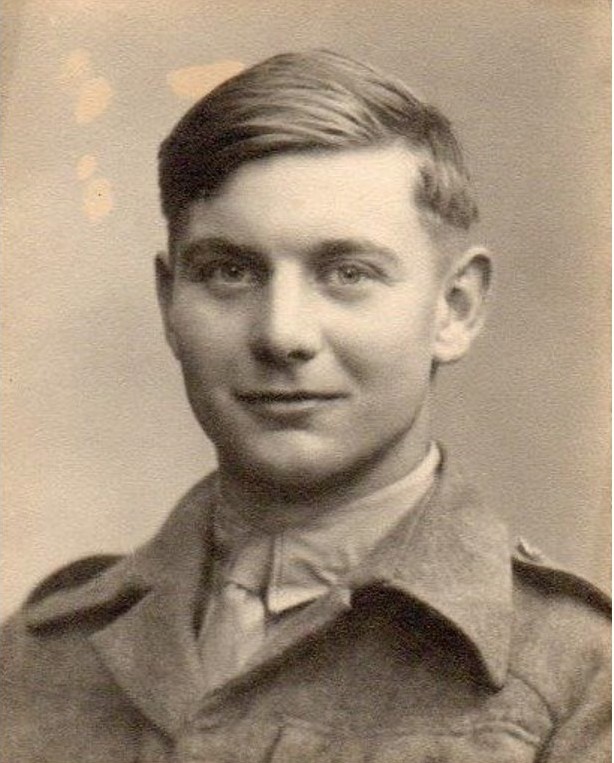
Robert Wigram
The photographs are shared by the Trust with kind permission from the 11th Armoured Division Facebook Group and its Black Bull Research Team, Laurette Guest, Robert's niece, Annie Ross and other members of Robert Wigram's family.
Remembering Robert Wigram, Killed in Action, 08 June 1944.
On 4th June 1944 Lieutenant Robert Wigram of the Inns of Court Regiment, Royal Armoured Corps departed England on a landing craft headed for the beaches of Normandy, France. He was never seen alive again by his family and friends.
After the war, Robert’s parents did all they could to discover the circumstances behind his death and created a specially bound book with the letters they had been sent from the regiment and details of their research showing what they had found.
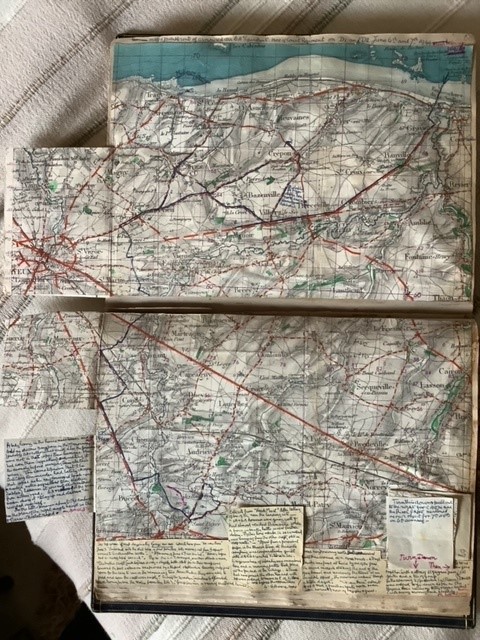
In 2016 family members set his great niece and nephew a task to find out as much as they could about the events surrounding his death, in particular:
• What happened to Robert Wigram in as much detail as you can find out
• How and where Robert Wigram died (a photograph and map would be
useful).
• Where he is now buried (a photograph of his grave and its location
would help others find his grave).
• What is known about his military service in France (what was his job,
what did he achieve).
• What happened to his immediate family following his death.
• What part he played in the larger action of World War II
This is what they discovered.
Robert Wigram was born on 1st November 1922 and died on 8th June 1944. His parents were Loftus and Constance Wigram. He had two older brothers, Gerald and Michael, and an older sister, Lettice. His older brother Michael was our great-grandfather. Robert died in France during the Second World War, two days after he participated in the D-day landings. During a family holiday in Normandy in August 2016, our family retraced his steps and tried to learn more about what happened to him.
On 4th June 1944 Robert boarded a ship and he landed at Graye-sur-Mer in Normandy, France, as part of the D-Day landings. Robert’s mission after disembarking was to act as protection to 85th Field Company of Royal Engineers who were to blow up as many of the 13 strategic bridges that were south of Caen on the rivers Orne and Odon as possible in order to prevent the Germans summoning re-enforcements. One of these possible re-enforcements was the notorious 21st Panzer Division. This was considered a suicide mission because it was unlikely that many of the soldiers would be returning alive. In an obituary of Prebendary John Lance who accompanied these soldiers as chaplain, this mission was described as “daring in the extreme, if not hare-brained.”
Robert’s patrol went 10 miles behind the enemy lines and was the first in the regiment, and indeed the army, to go so far. With only five men in his command, he participated in the capture of a German colonel and other staff at the HQ of a German artillery regiment near Tilly-sur-Seulles. He was supposed to bring the colonel back for interrogation but on the way back to their HQ his patrol was ambushed on the road from St. Pierre to Cristot, at the point marked x on the map.
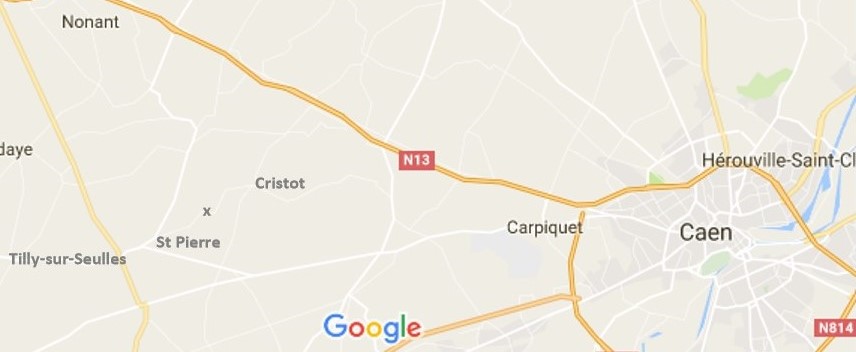
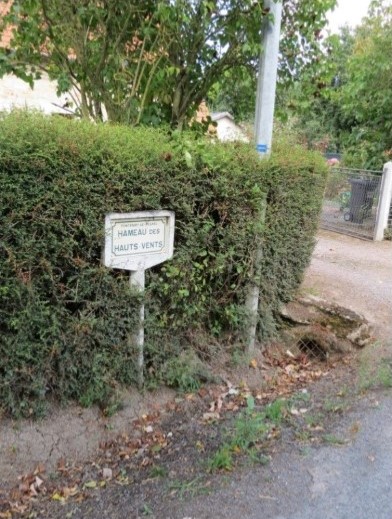
Unknown to Robert and his patrol, a German Panzer (tank) division was hiding in woods to the east of this road. His vehicle was ambushed and drove into a ditch, but Robert managed to jump onto another vehicle which was also under fire. However, Robert was shot and wounded and fell off the back of the car. The second car went round the bend, still under fire and drove into another ditch. Those who survived the ambush were unable to return to help Robert because the fighting continued, but they thought he had died instantly. He was found in the ditch (pictured below) by a French boy who told his mother there was a man asleep in the road.
Robert Wigram was first posted as missing before being reported as having been killed in action. In a letter to his parents, Colonel Bingley explained how they confirmed his death.
“It was in his attempt to bring the German Colonel back that he was, I fear, undoubtedly killed. The only two of his crew who got back (one badly wounded) could not give a definite confirmation; but subsequent evidence goes to prove this, I fear, almost for certain.
I went up there myself as soon as I could, but I couldn’t find out for certain as we were still fighting heavily round there; but an Officer close behind line told me he had seen an Officer in a green beret dead there, and it seems now that the Germans must have buried him there and marked the grave with his beret. I had no other officer killed anywhere near there and no one else wears green berets.
However, we felt that you would want to know for certain, and yesterday our Padre went up to the spot and disinterred the grave in question, and, although he appeared not to have been wearing his identity discs, there appeared to be little doubt from his clothes that it was his body.
I hate writing these sad details to you, but I felt sure you will want to know as much as possible; and I know that uncertainty makes it all worse
He was a fine boy, and a brave one, and my Regiment and I want to say how sorry we are for your sad loss.”
After the location of Robert’s grave had been confirmed, Major Warren, Officer Commanding, C Squadron, told his parents that the regiment was arranging for it to be marked by a cross.
The capture of the German artillery colonel together with several other soldiers is somewhat controversial. The records of the 12th SS Panzer Regiment present a very different story to that recorded by the Inns of Court regimental record and have led to claims of war crimes committed by the Allies and, more specifically, the armoured reconnaissance troop of which Robert was a part. This is how the incident was recorded by Hubert Meyer of the 12th SS Panzers:
Two English scouting parties, numbers 2 and 6a had crossed unnoticed through the thin security line of Panzeraufklarungsabteilung 12 on the left flank of the division… Near a hill, probably Hill 102, one kilometer south of Cristot, the two scouting parties encountered a group of members of the staff of the Panzer Artillerie-Regiment 130 of the Panzer-Lehr-Division. This group was made up of the regimental commander, Oberst Luxenburger, the Abteilung commander, Major Zeissler, the regiment adjutant, Hauptmann Graf (Count) Clary-Aldringen and some six NCOs and men. They had driven ahead to this location which offered a view of the area to prepare the action of the Regiment for the attack which had been ordered for 9 June.
According to the report by Graf Clary, these German soldiers were completely surprised by the English scouting parties and taken prisoner. After the German officers refused to voluntarily ride on the English armoured reconnaissance vehicles as shields against bullets, the badly disabled Oberst Luxenburger (he had lost an arm in the First World War) was bound by two English officers, beaten unconscious and tied to an English ARV, covered with blood. After respective orders had been received by radio, Major Zeissler, Graf Clary and the NCOs and men of the group were shot to pieces by the retreating British armoured reconnaissance vehicles. Except for Graf Clary who was saved from further bullets, after having received a number of wounds, by a dead comrade who had fallen on him, all German soldiers were killed. When the British reconnaissance vehicles crossed the German lines from the rear they were knocked out by a German anti-tank gun. Oberst Luxenburger, tied to one of the vehicles was wounded. He was taken to a German hospital where he died soon after…
In retaliation, three Canadian prisoners of war were ordered shot near the command post of the II./26 on the following day."
It is certain that this is a report of the same incident as described by the Inns of Court regiment:
2 and 6a captured three German officers, among them a colonel and 3 (other ranks). Upon withdrawing they were knocked out and lost all vehicles. Lieutenant Yodaiken and Lieutenant Wigram were killed, two other ranks missing. Four other ranks, led by Corporal Fowler, returned on foot, using the compass as guidance."
Did the Germans have any motivation for inventing a war-crimes incident? Graf Clary gave his account of this incident during a war-crimes trial of SS soldiers in 1948 to explain why they killed between 37 and 156 Canadian soldiers in cold blood several days later. Categorizing these killings as revenge for an earlier Allied war-crime (as his report clearly does, making an explicit link between the events) could have been seen to justify or at least explain these murders to some degree. There was therefore a strong motivation to make up this kind of story. However, it should be noted that the first recorded murders of three Canadians committed by this troop pre-date the alleged incident on 8th June.
Although the British Army never answered the unofficial claims of war crimes which appeared with the publication of these German sources, years later a surviving member of the squadron specifically denied them. Eric Knowles of the Inns of Court Regiment claimed that he was present in one of the reconnaissance cars and that the prisoners were placed, not tied, on top of the wagons. At least one of them was wounded. ‘Where else would you put these people when space is limited?’ he said. He also asserted that the accusation of war crimes was rubbish.
Robert Wigram was reinterred in the British War Cemetery in Bayeux, plot 11, row K, grave 25 on the 10th May 1945. The cemetery is a large, peaceful cemetery, very tidy and well organised. People of all nationalities, including Germans, are buried there. Although the cemetery has been there for 70 years, it still retains its dignity and sense of respect for those killed in the war.
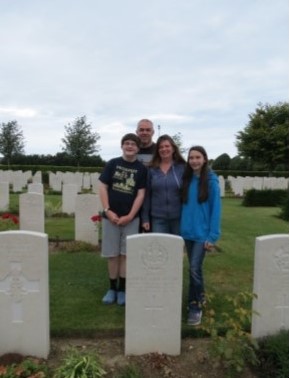
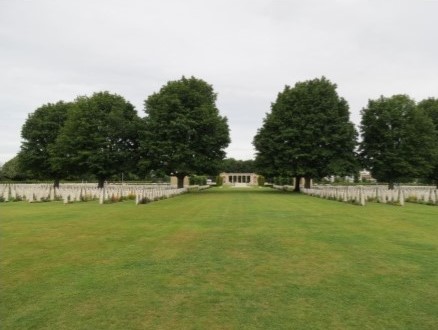
L-R: The Murrell family at the grave of Robert Wigram MC, the children's great uncle; Bayeux Cemetery
Once it had been determined that Robert had been recommended for a medal before his death, he was awarded the Military Cross for his actions. This was given to his parents in a ceremony in Buckingham Palace on 17th July 1945.
British Normandy Memorial – Additional Information
Robert Wigram was recommended for the MC by Lt Col R A G Bingley, Commanding Inns of Court Regt and Lt Gen J T Crocker, Commander, 1 Corps. The citation reads:
Action for which commended: This offr commanded the leading reconnaissance troop on D day on the TILLY-sur-SEULLES route. He carried out his task with initiative and speed through the coastal defences which had been considerably stiffened by Grenadiers, anti-tank units, and troops of tanks.
After crossing the SEULLES a short distance north of TILLY he was obliged to lie up in observation owing to the thickness of the enemy on the ground. On the morning of D+1 he effected the capture of the HQ staff of a German battalion, the CO of which he ordered to bring back for interrogation. While bringing him back it is known that he ran into an ambush and was wounded.
It was awarded on the 28 September 1944.
Sources
• Murrell R. and Murrell K. 2016, Robert Wigram, unpublished manuscript
• Margolian, H. (2000) Conduct Unbecoming: The Story of the Murder of Canadian Prisoners of War in Normandy University of Toronto Press, Toronto.
• Meyer, H. (1994). The History of the 12.SS-Panzerdivision Hitlerjugend. (translation from the German original Kriegsgeschichte der 12. SS-Panzerdivision "Hitlerjugend" 2 Bände. Munin-Verlag, Osnabrück 1982)
• Taggart, A.F. (1947). Needs Must. The History of the Inns of Court Regiment 1940-1945 Mildner and Sons, London.
• Tanter, J. (2000). La Bataille de Normandie CinémAction-Corlet.
• http://www.arrse.co.uk/community/threads/ta-was-the-british-ss.74129/
• British National Archives WO219/5045-044
• Daily Telegraph 11th September 1991
• Robert Wigram family album
FALLEN HEROES
ROBERT WIGRAM
Army • LIEUTENANT
Royal Armoured Corps
Inns of Court RegimentDIED | 08 June 1944
AGE | 21
SERVICE NO. | 268044
FALLEN HEROES
ROBERT WIGRAM
Army • LIEUTENANT
Royal Armoured Corps
Inns of Court RegimentDIED | 08 June 1944
AGE | 21
SERVICE NO. | 268044
FEATURED SHOP ITEM
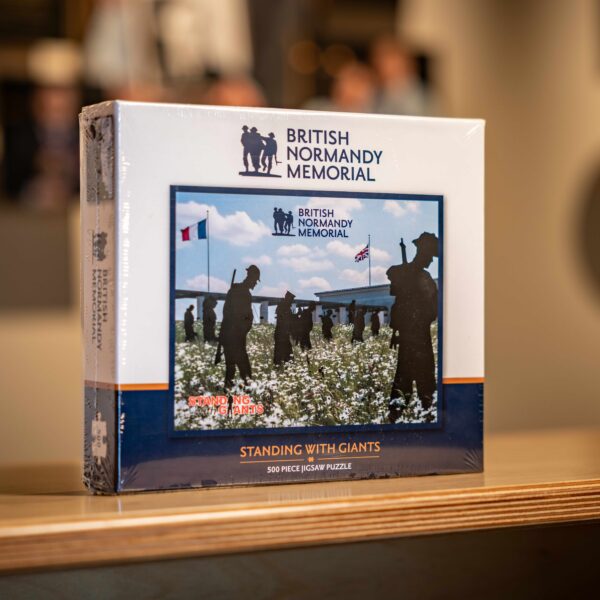
£25
ORDERStanding with Giants Puzzle
Bring a powerful moment of remembrance into your home with our Standing with Giants 500-piece jigsaw puzzle. Featuring the striking silhouettes installation at the British Normandy Memorial, this beautifully produced puzzle captures the scale and emotion of the tribute.
£22
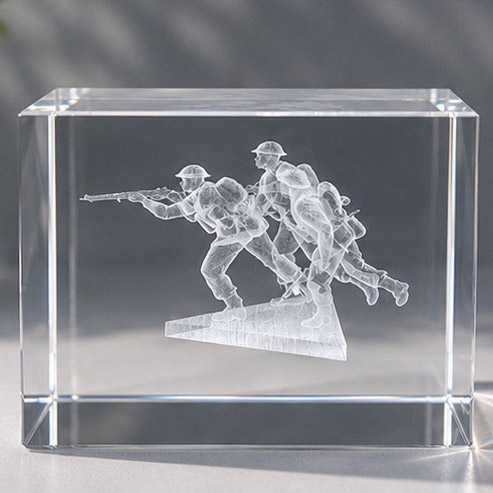
ORDERD-Day Sculpture Crystal Block
Laser-engraved within a solid crystal block, the detailed three-dimensional image can be viewed from different angles, creating a striking display piece.
£16.99
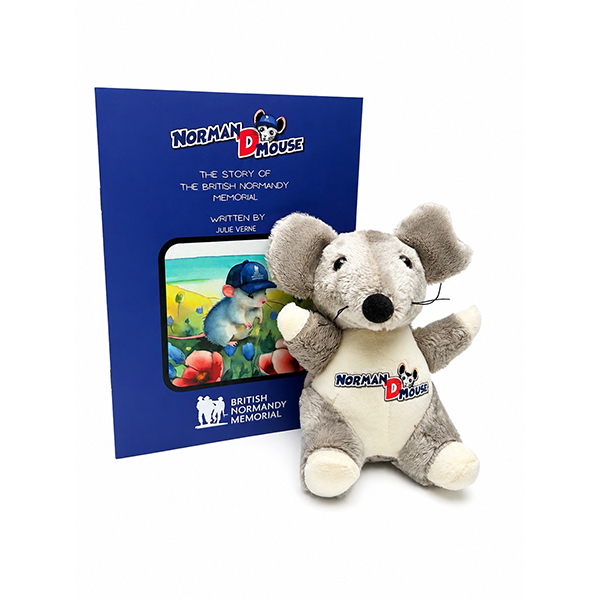
ORDERNorman D. Mouse & Book Gift Set
Meet Norman D. Mouse, the little mouse with a very big story to tell!