



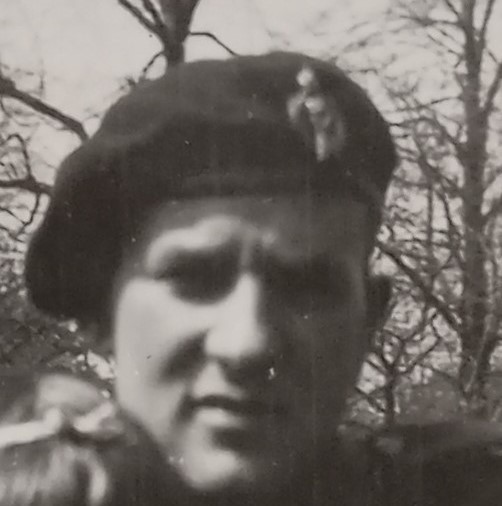
Richard Haskayne
This story and photographs are shared by the Trust with kind permission from Ann Stokes (née Haskayne) and Rosemary (Rosie) Haskayne, daughters of Richard Haskayne.
My parents were Richard and Gladys Haskayne (née Goacher). My father was born in Didsbury, Manchester on the 21st July 1914, the son of Thomas and Sarah Haskayne (née Mason). He married Gladys Eliza Ann Goacher on the 10th November 1937 when they were living in Tunbridge Wells. My father was working as a Chemists Assistant and my mother was working as a Domestic Servant. Shortly afterwards they moved to 207 Uxbridge Road, Hammersmith.
I know from experience that he was an avid photographer. I was taken many times to London Zoo - he loved photographing the animals and was always interested in nature. He was well known for "having his head in a book"! From what I have been told he was well read and liked the classics. Rosie and I follow after him. I was told that he also liked drawing and painting. When he started his chemist training, part of it was related to plants and flowers: he did some lovely pictures such as the Foxglove - very important in relation to heart problems. Lastly, I had a big surprise when I found that Dad was born in Manchester. I had grown up thinking that he was born in Ormskirk, Lancashire where there were several relatives.
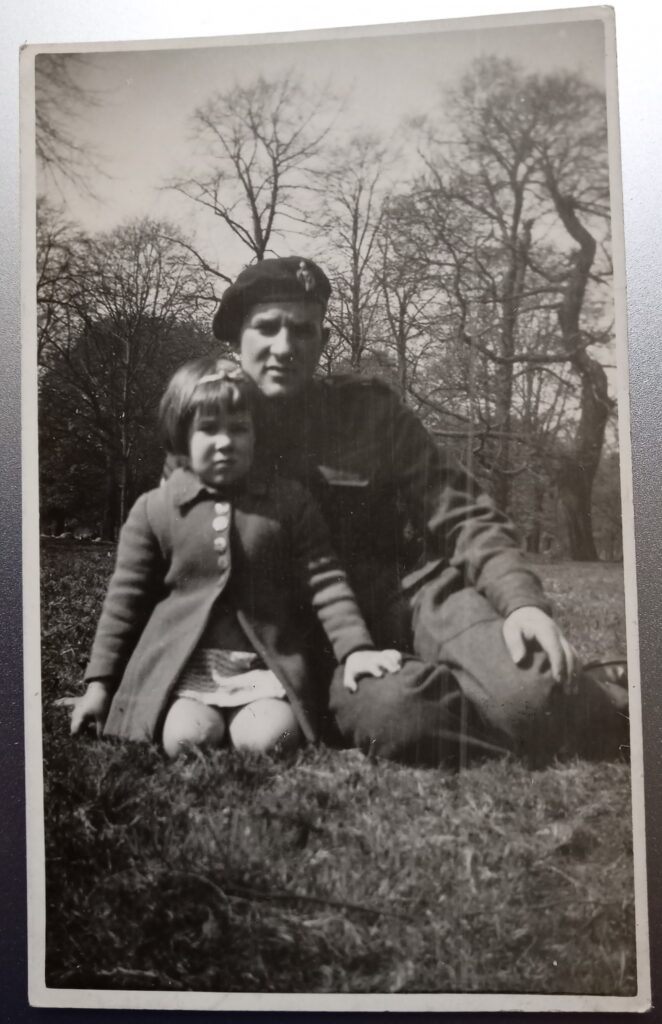
Dad and Ann, c. 1944, believed to have been taken when on his embarkation leave
According to my father's Army Record he volunteered to join up in 1942. After training, he became Trooper Richard Haskayne and was allocated to the 13th/18th Royal Hussars – a tank regiment. As he was a trainee chemist he could have remained in the UK. His record further shows that he took part in the D-Day Landings where he landed on Sword Beach. He survived the landing and carried on with the move forward into Normandy. Sadly he died on 6th August 1944 in the Battle for Mont Pinçon.
I was 5 years old and my Mum was pregnant at the time that my father was killed in Normandy on the 6th August 1944. My sister, Rosie, was born in December 1944 so she never knew her Dad. My Mum received the usual “ Notice of Death”
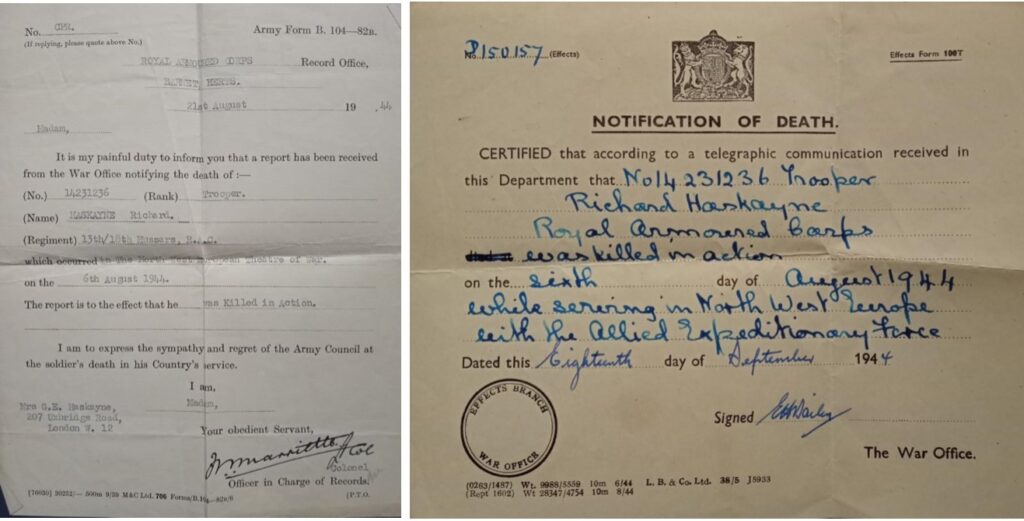
and a subsequent letter of condolence from Dad's commanding officer which he wrote on the 15th August.
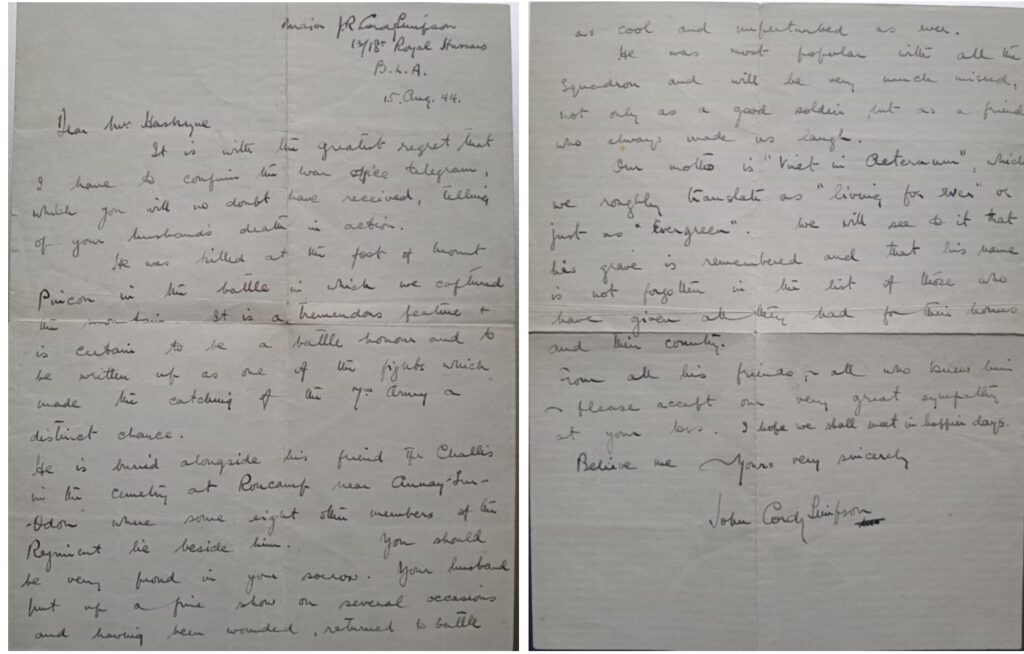
This contained information that Dad had been injured twice and returned to the front line.
"Dear Mrs Haskayne
It is with the greatest regret that I have to confirm the war office telegram, which you will no doubt have received, telling of your husband’s death in action.
He was killed at the foot of Mount Pincon in the battle in which we captured the mountain. It is a tremendous feature & is certain to be a battle honour and to be written as one of the fights which made the catching of the 7th Army a distinct chance.
He is buried alongside his friend Tpr Challis in the cemetery at Roucamps near Aunay-sur-Odon where some eight other members of the Regiment lie beside him. You should be very proud in your sorrow. Your husband put up a fine show on several occasions and having been wounded, returned to battle as cool and unperturbed as ever.
He was most popular with all the Squadron and will be very much missed, not only as a good soldier, but as a friend who always made us laugh.
Our motto is “Vivet in Aeternum”, which we roughly translate as “Living for ever” or just as “Evergreen”. We will see to it that his grave is remembered and that his name will not be forgotten in the list of those who have given all they had for their homes and their country.
From all his friends & all who knew him please accept our very great sympathy to your loss. I hope we shall meet in happier days. Believe me Yours very sincerely
John Cordy Simpson"
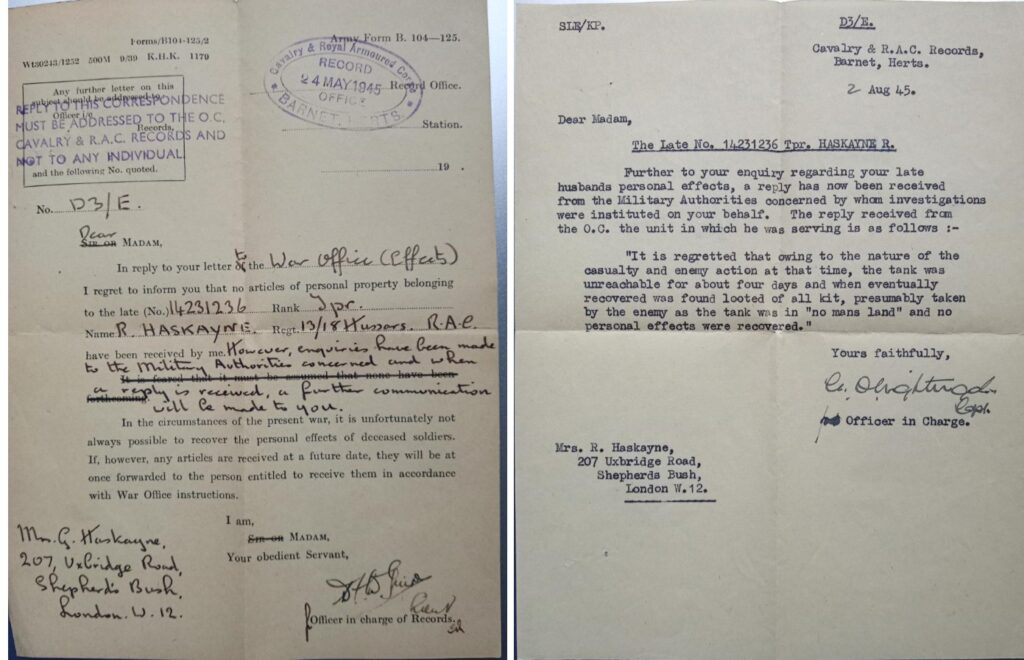
Mum evidently requested the return of his belongings as we have a letter informing her that there were no belongings as the tank was stranded in “no man's land” for 4 days and every thing had been taken.
After the war ended, when the deceased were being reburied and the cemeteries were being developed, my Mum and my Aunt went to visit Dad's grave in Normandy in around 1947/48 or 49. He is buried in St Manvieux Cemetery just outside Caen after being moved from his original place of burial in Roucamps on the 17th December 1945. At this time there were no proper headstones – just a simple white wooden cross with details of death and regiment.
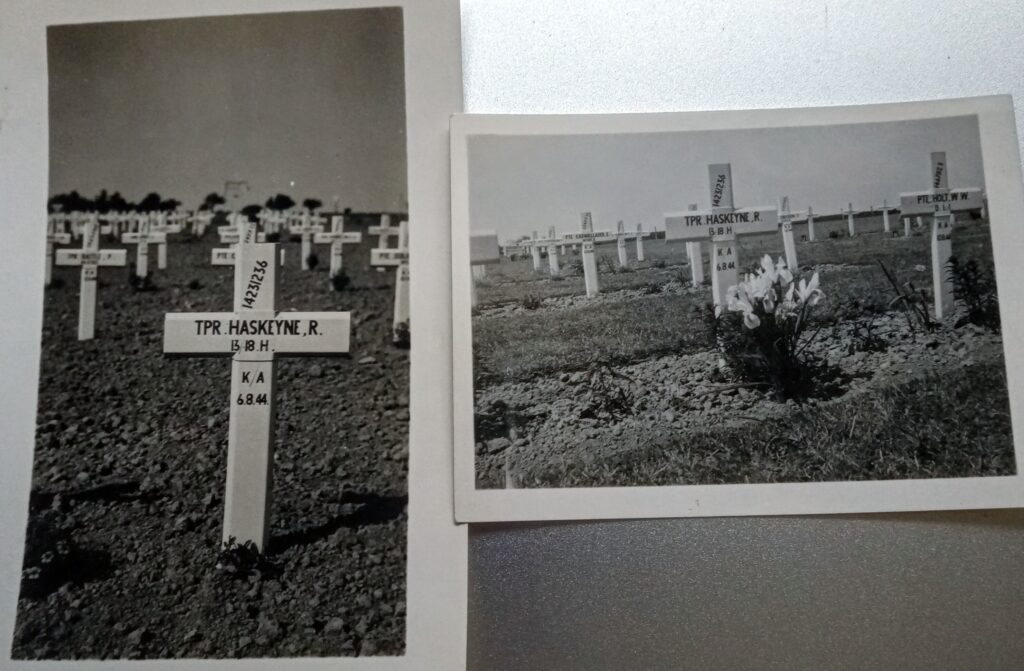
As soon as they arrived at the graveside they saw that the surname was wrongly spelled and told the leader in charge of the group visit. This was immediately rectified and a reporter, who seemed to be accompanying the trip, took a photograph of my Mum and Aunt by the Cross showing the correct name. This photograph then appeared in the Picture Post magazine. I clearly remember seeing this photograph but unfortunately do not have a copy. I have tried contacting the magazine but they were not very helpful. My mum passed away in 1950 and never saw the completed cemeteries with the full headstones.
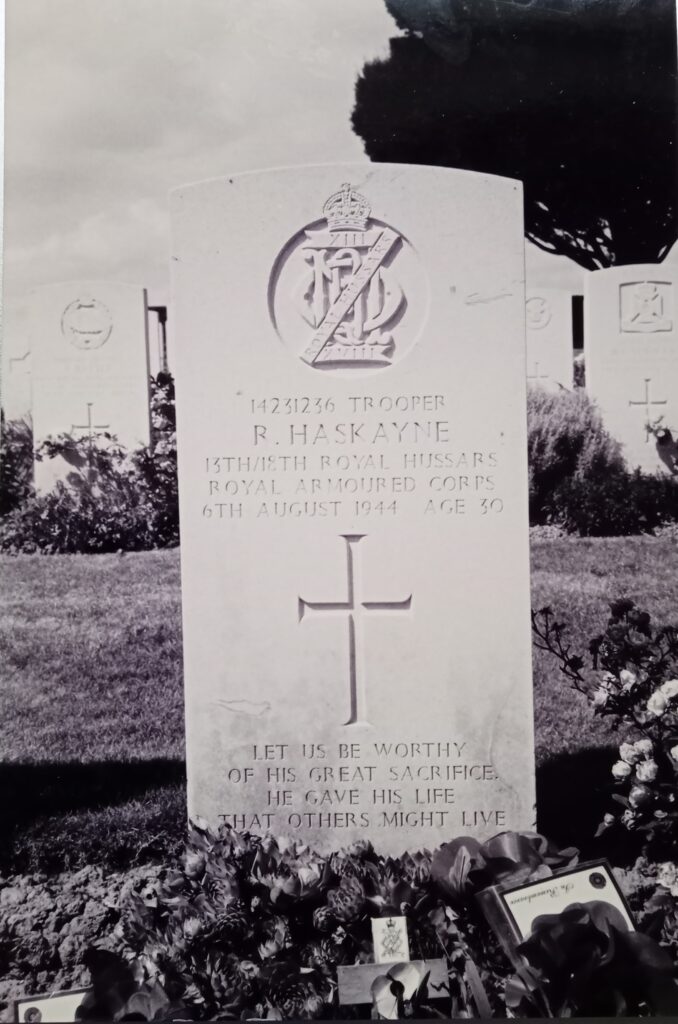
My sister and I have visited Dad's grave and I have made a point of taking all my children on a British Legion Trip to visit his grave. In 2022 I decided that I still really wanted to know where my Dad died. Hence, I booked a bespoke trip to hopefully find more information. This trip included 2 of my children and 2 grandchildren and a close member of the family. The trip was planned by Colonel Mike Bradley OBE who is an expert regarding WW2. He was the guide for us and it was an excellent visit. It was planned to follow my Dad's tank movements from landing on Sword Beach to Mont Pincon where Mike identified where the tank would have been at the foot of the mountain. There is an actual monument at the mountain top that is dedicated to the 13th/18th Hussar Regiment. It is set looking down the Valley where the Battle took place.
I have also visited the British Normandy Memorial with my family, where we found Dad's name on one of the pillars. It is a very moving moment when you find the name. In the UK, there is a museum at Cannon Hall near Barnsley where there is a section that is dedicated to the 13/18 Royal Hussars, there is a Roll of Honour in the Regimental History book which contains his name and we have his medals which were awarded to him.
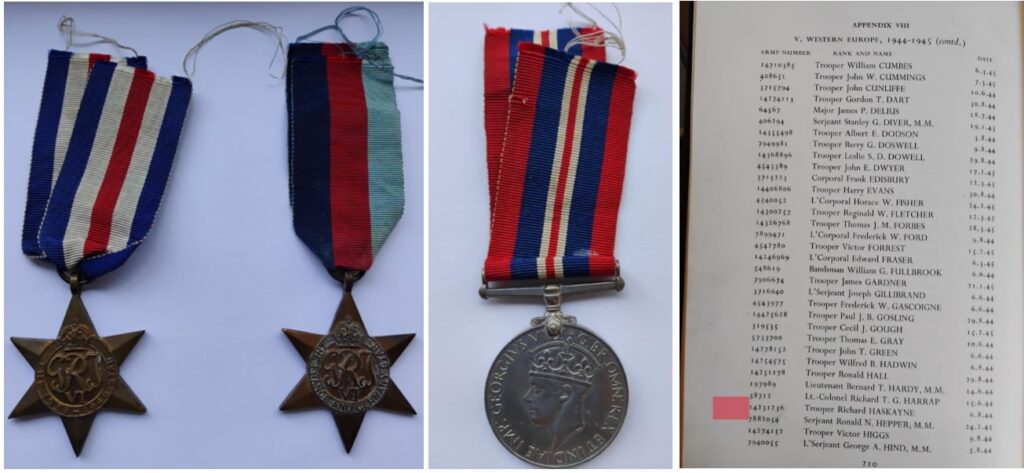
The National Memorial is a great tribute to those who fell in the Battle for Normandy.
FALLEN HEROES
RICHARD HASKAYNE
Army • TROOPER
Royal Armoured Corps
13th/18th Royal HussarsDIED | 06 August 1944
AGE | 30
SERVICE NO. | 14231236
FALLEN HEROES
RICHARD HASKAYNE
Army • TROOPER
Royal Armoured Corps
13th/18th Royal HussarsDIED | 06 August 1944
AGE | 30
SERVICE NO. | 14231236
FEATURED SHOP ITEM
£25
ORDERStanding with Giants Puzzle
Bring a powerful moment of remembrance into your home with our Standing with Giants 500-piece jigsaw puzzle. Featuring the striking silhouettes installation at the British Normandy Memorial, this beautifully produced puzzle captures the scale and emotion of the tribute.
£22
ORDERD-Day Sculpture Crystal Block
Laser-engraved within a solid crystal block, the detailed three-dimensional image can be viewed from different angles, creating a striking display piece.
£16.99
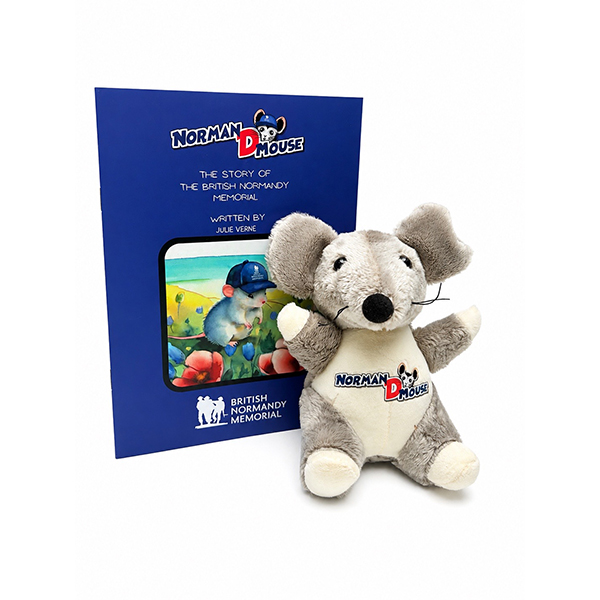
ORDERNorman D. Mouse & Book Gift Set
Meet Norman D. Mouse, the little mouse with a very big story to tell!