



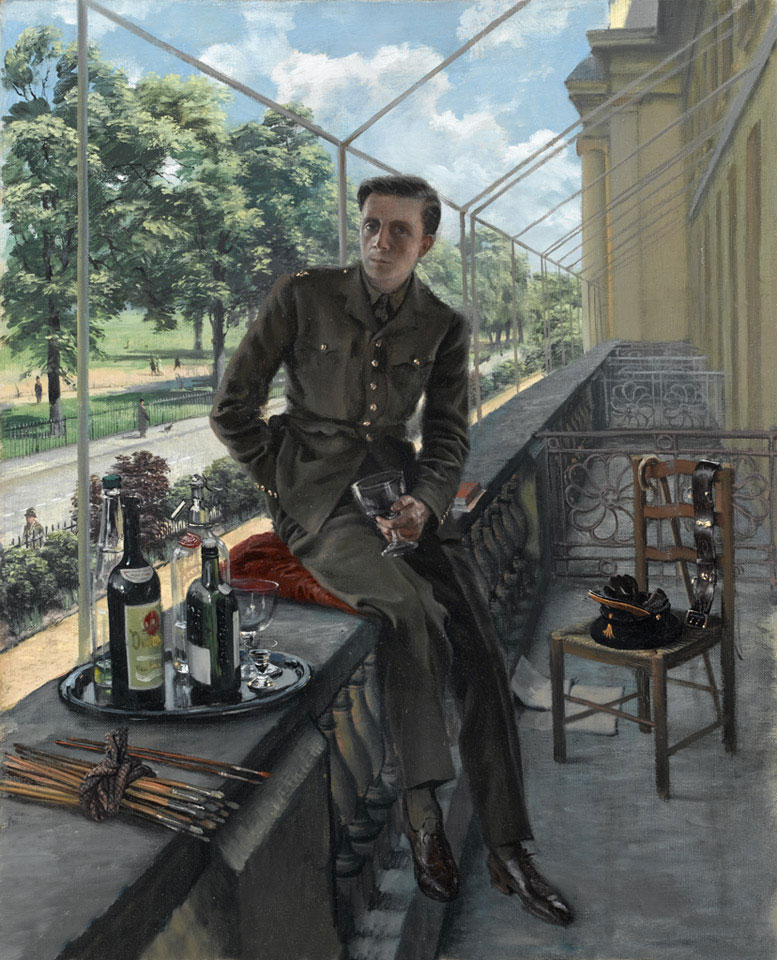
Rex John Whistler
Art and war are indeliby connected. Some artists served as official war artists and some were artists at war. Rex Whistler would become an artist at war. He was born in 1905 in Eltham, Greenwich, Greater London, the eldest son of Henry and Helen Whistler. The family moved to Farnham Common in Buckinghamshire in the 1920s just before he was accepted at the Royal Academy. But he didn't get on at the Royal Academy so he moved to the Slade School of Art. After graduating from the Slade he became a professional artist and produced many portraits as well as designs for Wedgewood China, scenery and set design for ballet productions and illustrations for Hans Christian Anderson's Fairy Tales and Legends. In 1933 Rex moved, with his parents and younger brother, Laurence, to Bolebec House, Whitchurch. They moved again to Salisbury, Wiltshire in 1937.
In 1938-1939 Rex was living and working at Mottisfont Abbey where he had been commissioned by the owner, Maud Russell, to transform the former entrance hall/cellar space into a large saloon. He painted illusionistic Gothic architecture, including painted columns, niches, urns, and flower swags that make the flat walls appear vast and three-dimensional.
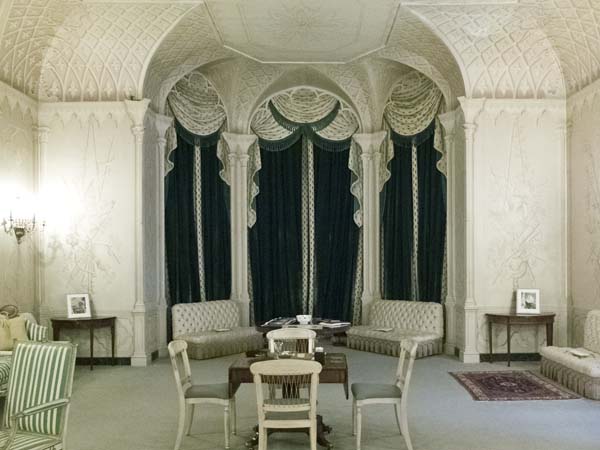
Whistler Room, Mottisfont Abbye, Hampshire. Source: Anthony Houghton, Strolling Guides
He had finished he commission when war was declared and he was keen to join the army, although, aged 35, he would have been deemed fairly old. He was considered for the role of official war artist but it appears his name was marked with a 'No' on the official list. So Rex joined the Welsh Guards where he trained as a tank commander. He trained for four years in Caterham, Wiltshire, Norfolk and the Yorkshire Moors but he continued painting and did sketches and drawings of his fellow soldiers and military life. He also had a special box made for himself in which he placed his painting materials.
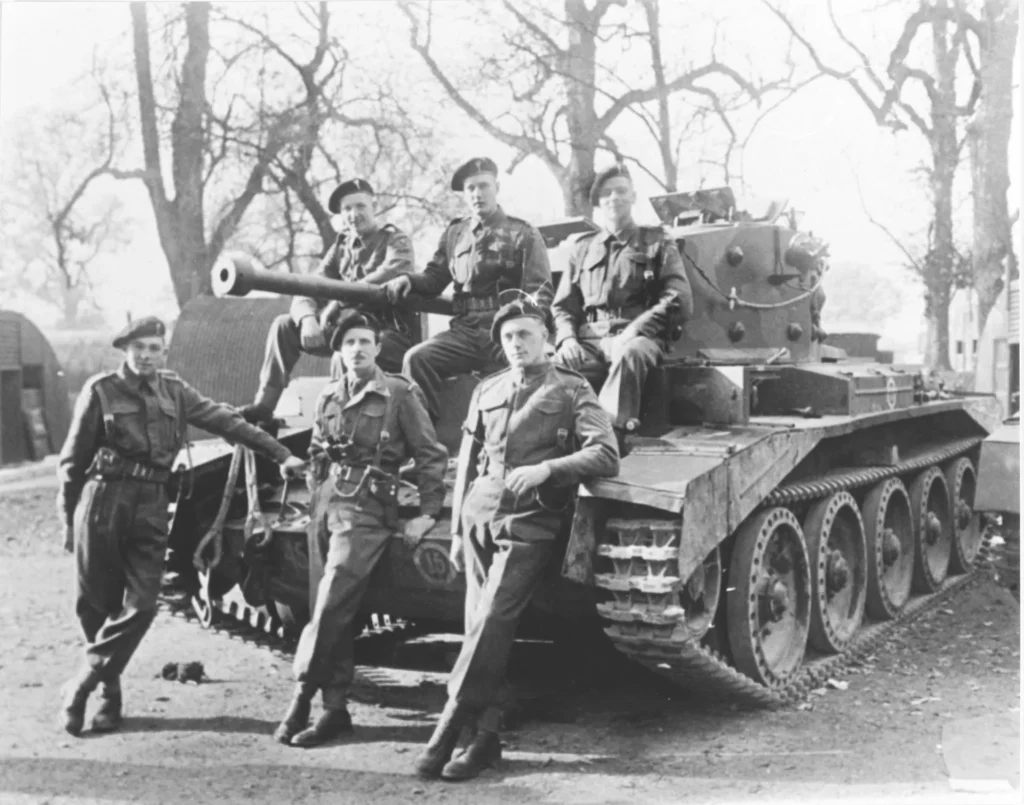
Rex Whistler, standing front at the centre, with his tank crew in Pickering, Yorkshire, 1944. Image credit: Rex Whistler Archive_The Salisbury Museum
Rex was also involved in many cultural and artistic endeavours. He was a contributor to The Queen's Book of the Red Cross that was published in January 1940 in aid of the Lord Mayor's Fund for the Red Cross and Order of St John and in November 1940 he was a judge in the handicrafts and art section at the first wartime Welsh Guard's Eisteddford in November 1940. In 1943, one of his paintings was exhibited in Leicester Art Gallery and he continued to design sets and costumes for a number of plays and ballets. In 1943 he also worked with the Saders Wells Ballet to restore the set he created for the Rake's Progress that had been lost when the company had been in touring in Holland in 1940 and were nearly overtaken by the German invasion. He also made many suggestions for the design of the Reconnaissance Corps Badge when he served in the 24th Independent Company of the Corps.
The 2nd Battalion, Welsh Guards arrived in France at the end of June 1944 and he landed with his paint materials box fixed just behind the turret of his Cromwell tank. One of Whistler's strengths was portraiture and he often sketched his fellow soldiers whilst in Normandy. As he was the burial officer of his regiment he also carried 20 crosses and it was said his soldiers became somewhat suspicious of the crosses he carried on his tank.
The battalion did not see action until one month after landing. But in his first action during Operation Goodwood, on the 18th July, his artistic career came to an abrupt halt when he was the first of his battalion to be killed. Just days before, he remarked to a friend that he wanted to be buried where he fell, not in a military cemetery. On the night before his death, a fellow officer named Francis Portal came up to him, and they talked for a while. Before they parted, Portal remarked, "So we'll probably see each other tomorrow evening." Whistler replied, "I hope so."
As his troop was driving near Demouville on the outskirts of Caen they had to cross a railway cutting into which telegraph wires had fallen. The first two tanks got across but Whistler's tank became entangled in the fallen wires. As the crew tried to free it they came under machine gun fire which prevented them from remounting to send a message as they had left their radio temporarily unmanned whilst they freed their tank. So Whistler crossed approximately 50 yards of exposed ground to reach Sergeant Lewis Sherlock’s tank and warn him to clear the village. Having delivered the warning, he jumped down to make his way back but a German mortar bomb exploded beside him, killing him instantly.
His troop collected his personal effects but was called away before they had time to bury him. That night, Sherlock asked leave to take a scout car to bring his troop leader back for burial but when they reached the spot they found an officer of the Rifle Brigade had already buried him and had placed a crude cross on it, marked ‘an unknown officer’. All he could do was substitute Whistler’s name in red wax pencil. Rex Whistler was later re-interred in Banneville-la-Campagne War Cemetery on the 9th August 1945.
A number of news articles were published following his death including in the Salisbury Times on the 4th August 1944.
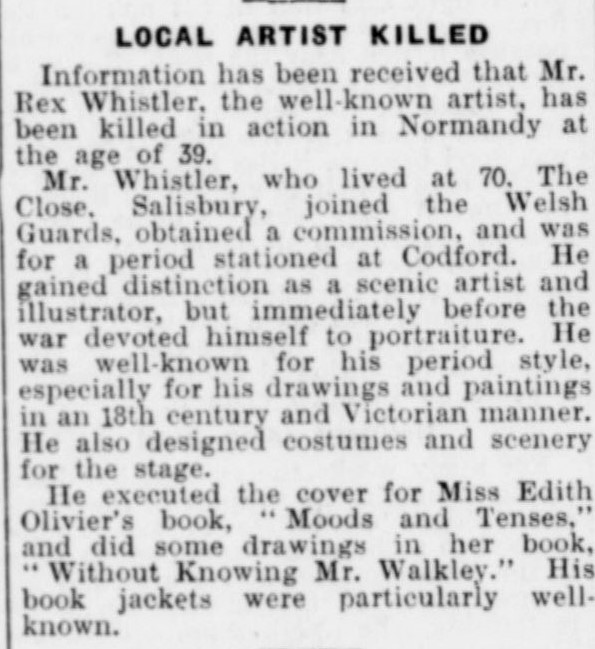
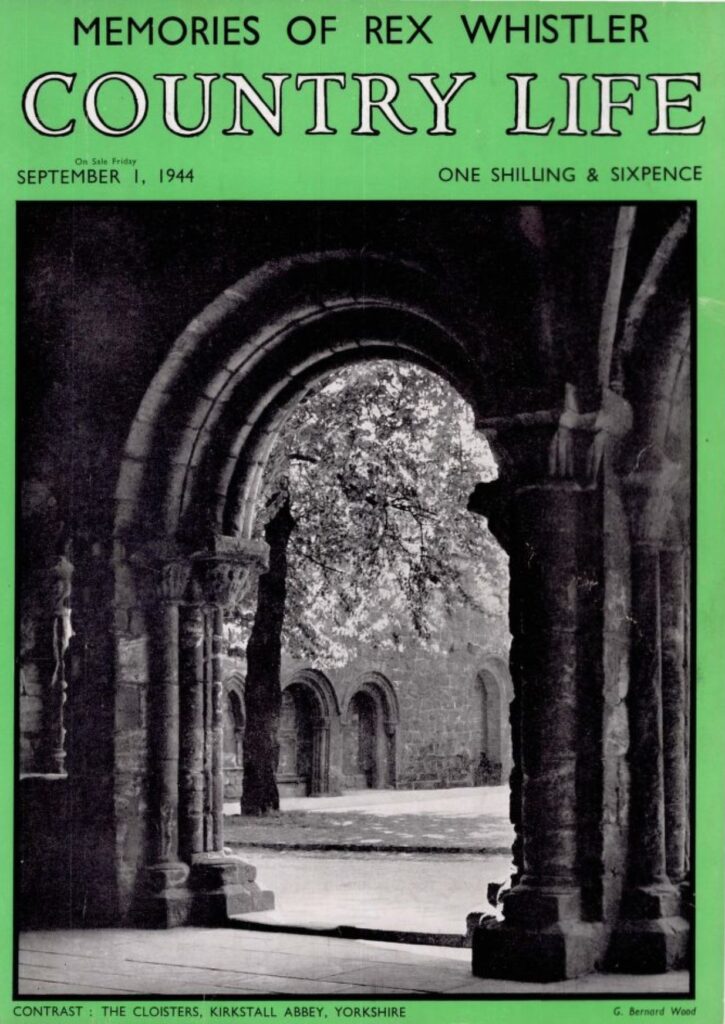
It was said that the Times newspaper received more letters about Whistler's death than for any other war victim. And in September 1944 Country Life published a short biographical booklet about him. Rex was very well known in artistic circles and Sir John Gielgud was one of many to comment on his death. He wrote a letter to Alec Guinness, which was published in A Life in Letters, edited by Richard Mangan (Arcade Publishing 2004) in which he said, "Whistler's death is a major tragedy" adding that "He wanted to prove that 'artists can be tough' and alas, he has done so—but the world is greatly the poorer for his sacrifice".
Rex's tank driver, Evan Evans, survived the war and spoke very highly of him. He said he was a perfect gentleman and greatly respected. Rex's brother, Sir Laurence Whistler, was an artist like his brother, specialising in stained glass work and poetry. He created a memorial prism in his memory which was placed in Salisbury Cathedral. It sits in a bronze lantern which was given by the Welsh Guards. As it turns each side gives a different view of the cathedral.
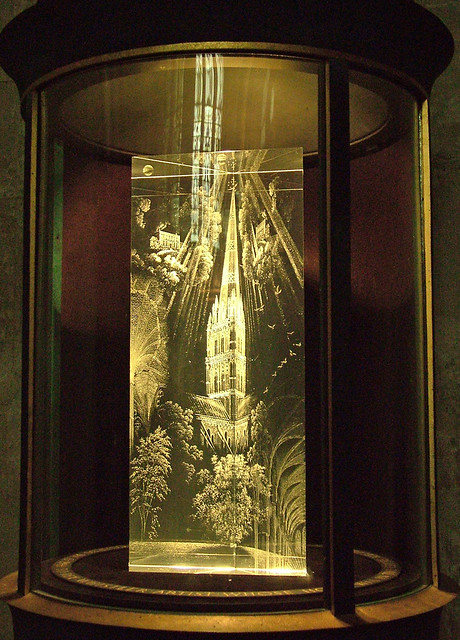
Rex Whistler Memorial, Salisbury Catherdral. Source: Stuart Palmer, Flickr
Inscribed on a ring which forms the base on which the prism stands are the words To Rex Whistler Artist . Whose home was in The Close . Killed in Normandy in the Welsh Guards . 1903 -1944. An additional inscription states: In memory of/ REX JOHN WHISTLER/ Lieutenant/ 131651/ Welsh Guards/ who died on/ Tuesday, 18th July 1944. Age 39
The National Army Museum holds the self portrait which is at the start of his story. Whistler painted it in 1940 and they have done a short, explanatory, film which you can see here.
FALLEN HEROES
REX JOHN WHISTLER
Army • LIEUTENANT
Welsh Guards
2nd BattalionDIED | 18 July 1944
AGE | 39
SERVICE NO. | 131651
FALLEN HEROES
REX JOHN WHISTLER
Army • LIEUTENANT
Welsh Guards
2nd BattalionDIED | 18 July 1944
AGE | 39
SERVICE NO. | 131651
FEATURED SHOP ITEM
£25
ORDERStanding with Giants Puzzle
Bring a powerful moment of remembrance into your home with our Standing with Giants 500-piece jigsaw puzzle. Featuring the striking silhouettes installation at the British Normandy Memorial, this beautifully produced puzzle captures the scale and emotion of the tribute.
£22
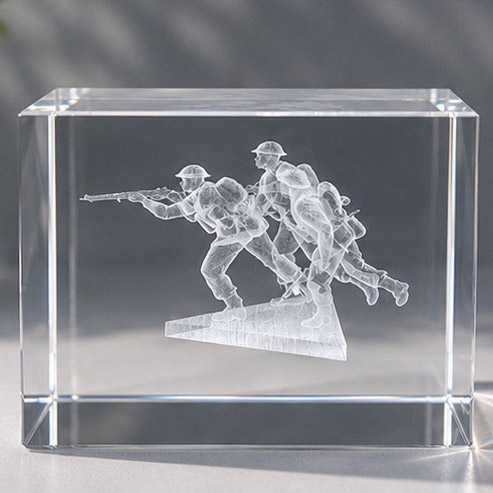
ORDERD-Day Sculpture Crystal Block
Laser-engraved within a solid crystal block, the detailed three-dimensional image can be viewed from different angles, creating a striking display piece.

£16.99
ORDERNorman D. Mouse & Book Gift Set
Meet Norman D. Mouse, the little mouse with a very big story to tell!