



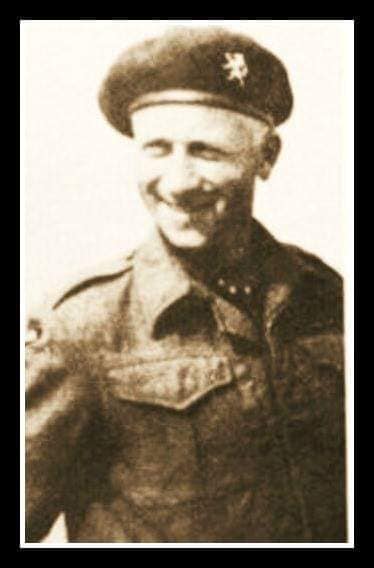
Henri Louis Legrand
This story and photo is shared by the Trust with kind permission from the 11th Armoured Division Facebook Group and its Black Bull Research Team. Memorial image with research information courtesy of freebelgians.be Memorial photo courtesy of Vincent and Maryvonne Robillard
Henri Louis Legrand was born 5th January 1902 in Namur, Belgium. He was christened Louis Marie Joseph Ignace Henri Legrand but in later years he preferred to be called Henri Louis Legrand. Henri married Marie Thérèse Ilegems on the 30th May 1937 and they had a son and a daughter.
At the outbreak of war in 1939, he was serving as Adjutant-Major of the 22nd Artillery Regiment, Belgian Army. In May 1940, after Germany invaded Belgium on 10 May 1940 he was soon engaged in the fighting behind the Albert Canal. The regiment fired until it ran out of ammunition and then had to fall back because, on the evening of the 12th, the Germans were level with the artillery. The Belgium Army was pushed back to the north-west corner of the country and after 18 days, without consulting the government, the Belgium king, Leopold III, ordered the army to surrender – a surrender that Legrand never accepted.
The British Expeditionary Force (BEF) and remains of the French and Belgian armies retreated to Dunkirk. Many were able to get across the Channel as part of Operation Dynamo, the evacuation of troops across the Channel. Henri Legrand was captured but he managed to escape and made it to Britain in August 1940 via France, Spain and Portugal.
A recruitment centre was opened in London for Belgians who wished to join the Belgian Free Forces to continue to fight. A battalion was formed in Tenby under the command of Major Charles de Caulmont and Legrand was placed in charge of the 1st Company. He was a popular and charismatic character and a committed royalist. Impatient with delays in organizing the Belgian forces, Louis Legrand, whose loyalty to the King and zeal for the struggle were unconditional, was sent by the officers to "obtain from the Government the resources essential to continuing the fight for the liberation of the Fatherland and the King." He was received by Prime Minister Pierlot and explained the need to consider the prevailing mood in Belgium and that of the Belgian officers in Great Britain.
For two years Louis Legrand would help gather Belgians in order to incorporate them into combat units. In the meantime, he applied to be posted to a British tank unit so he could get to know the weapon which had the main element of the German victory in 1940 and fulfil his desire to fight for the liberation of his country. On May 11, 1942 he joined the British armoured forces and was posted to the 6th Royal Tank Regiment and then 10th Hussars in North Africa where he gained a reputation for his gunnery expertise. He was awarded the DSO on December 17, 1942 for his expert gunnery and bravery during the battles at Alamein. He was then posted to the Sherwood Rangers Yeomanry
The Sherwood Rangers were quick to use his expert knowledge of gunnery. Stanley Christopherson, who then commanded A Squadron, described Legrand as 'charming, capable and brave'. He was highly popular and was nicknamed ‘The Insatiable Major Henri’. At the end of July he helped prepare for the defence of El Alamein against a new attack. When it began on August 30th, Legrand requested to be a gunner in a Grant tank and, for several days, participated in the defensive battle. He wrote: "As in previous days I am a 'Gunner,' I am finishing my experience with the American 75mm gun with indirect fire (the gunner does not directly see the enemy but is informed of his aim by an observer); it is a good day…"
He spent the period from December 30, 1942 to February 28, 1943 on the staff of the 8th Army which was advancing towards Tripoli and Tunisia. He then went back to Cairo where he found the Belgian Colonial Brigade, which had arrived from the Belgian Congo. He was asked to take care of the conversion of this unit to a British organization. For this purpose, he made a trip to Léopoldville after which he joined the Belgium Ministry of National Defence in London. But he was held at a distance by the Belgian authorities and decided to return to the British units where he was welcomed with open arms.
At first they intended to get him to provide instruction for tank gunners and sent him to the Army Armoured Fighting Vehicle School at Bovington but then he joined the 23rd Hussars, where he served with his usual enthusiasm as they trained and made preparations for the Battle of Normandy.
His unit landed in Normandy on the 15th June 1944. Henri Legrand was serving as a troop leader with B Squadron, 23rd Hussars and Stanley Christopherson was commanding the Sherwood Rangers. On 20 June Christopherson tried to get Legrand back into the Regiment and paid a visit to Brigadier Roscoe Harvey, commanding 29th Armoured Brigade, of which the 23rd Hussars were attached. But with tank commander losses being so high in the Hussars, the meeting was unsuccessful.
Legrand had named any tank he served in "Liberator", to symbolize his ardent desire to liberate his country and his family that he had left four years before. But he would not live to see this happen. On the June 27, 1944, just two months short of reaching his homeland, Henri Legrand was killed when his tank was hit by an anti-tank gun in Mouen, south-west of Caen. The remains of the two drivers and the loader were found but those of Legrand and his gunner were never recovered due to the severity of the fire when the ammunition on board the tank exploded. The mayor of the village of Mouen, who was hiding near the place where the tank was burning less than thirty meters from his house, confirms that none of the occupants could have survived. A memorial to Henri LeGrand and his crew was erected in Mouen in June 1994 and stands on the spot where their tank was hit.
His Brigade Commander, in announcing his death to the Belgian Ambassador in London, ends his letter with this eulogy: "Major Legrand has rendered invaluable services to the Brigade as an artillery instructor during the six months which he was attached to it and he won the respect and admiration of all, officers and soldiers, not only by his vast knowledge of the subject which interested him deeply but also by the charm of his personality, by his gifts of coach, by his faith in the cause for which we fight and by his tireless efforts to improve the shooting value of the Brigade”
His Brigade Commander would also write to Legrand’s wife a few days after the liberation of Belgium. “He always displayed the most sublime courage, and his outstanding military qualities filled us with admiration…We deeply regretted his passing, all the more so now that the liberation of Belgium would have returned him to his family, from whom he had been separated for so long and whom he so ardently desired to see again.”
The memorial in his honour and that of his tank crew was inaugurated on June 7, 1994, on the 50th anniversary of D-Day. It was funded by the National Federation of Belgian War Volunteers and the municipality of Mouen. Around 150 Belgians came for the unveiling including relatives, Belgian schoolchildren and Belgian veterans. There is also a 'Rue Major Henri Legrand' in Mouen itself.
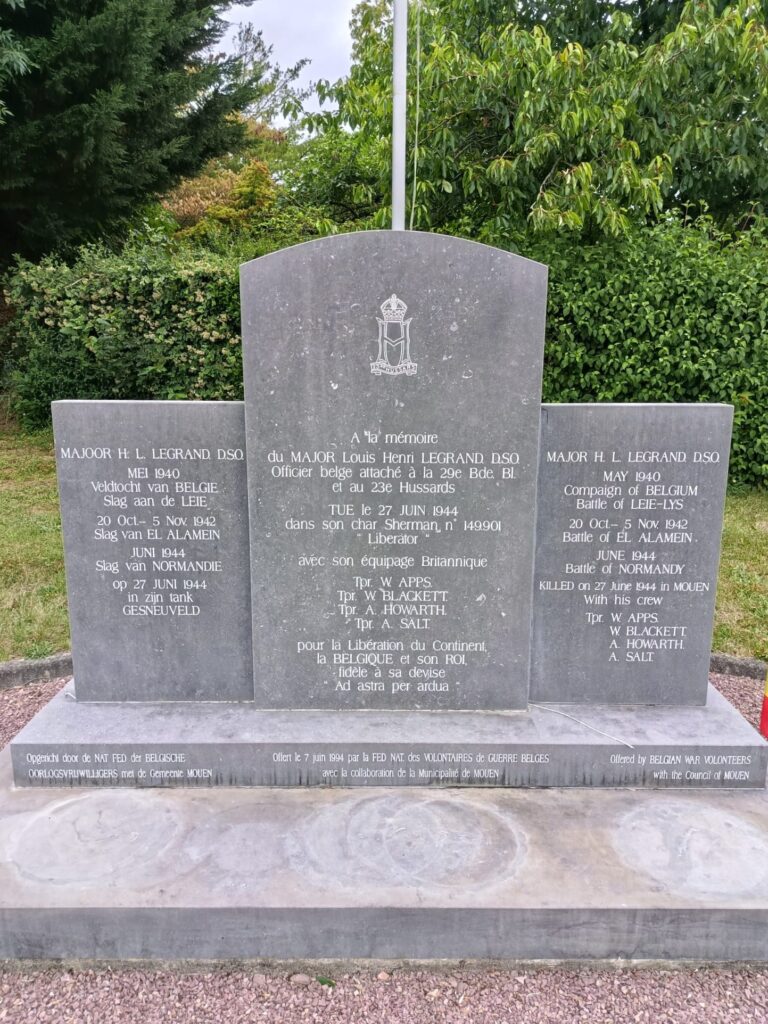
Photo credit: Vincent and Maryvonne Robillard
FALLEN HEROES
HENRI LOUIS LEGRAND
Army • MAJOR
Royal Armoured Corps
29th Armoured BrigadeDIED | 27 June 1944
AGE | 42
SERVICE NO. |
FALLEN HEROES
HENRI LOUIS LEGRAND
Army • MAJOR
Royal Armoured Corps
29th Armoured BrigadeDIED | 27 June 1944
AGE | 42
SERVICE NO. |
FEATURED SHOP ITEM
£25
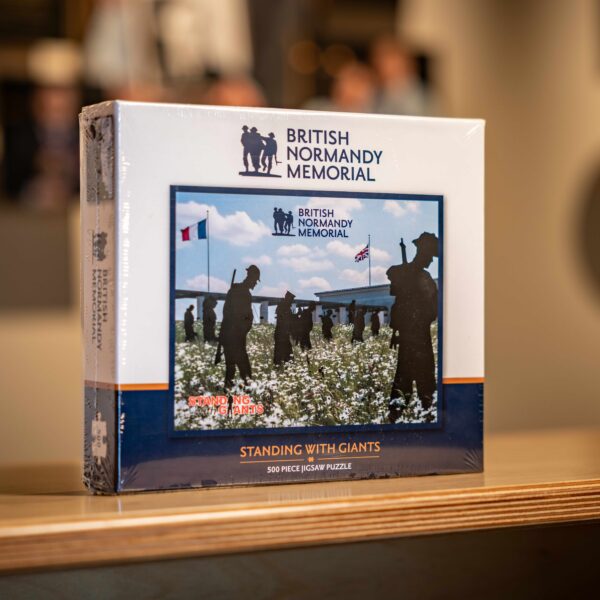
ORDERStanding with Giants Puzzle
Bring a powerful moment of remembrance into your home with our Standing with Giants 500-piece jigsaw puzzle. Featuring the striking silhouettes installation at the British Normandy Memorial, this beautifully produced puzzle captures the scale and emotion of the tribute.
£22
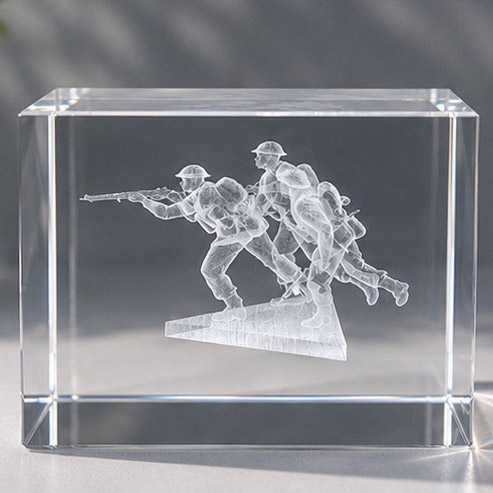
ORDERD-Day Sculpture Crystal Block
Laser-engraved within a solid crystal block, the detailed three-dimensional image can be viewed from different angles, creating a striking display piece.
£16.99
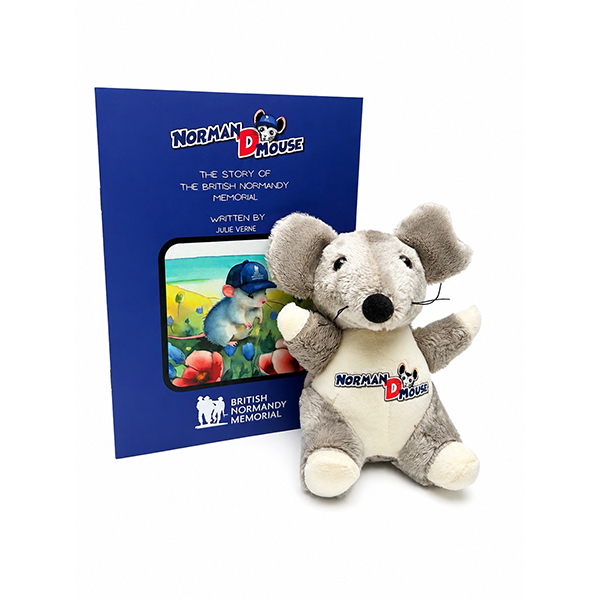
ORDERNorman D. Mouse & Book Gift Set
Meet Norman D. Mouse, the little mouse with a very big story to tell!