




Nagur Pitchay
This story and photos are shared by the Trust with kind permission from Ali Chaudhry, Second World War Historian based in Dubai, United Arab Emirates.
Nagur Pitchay was born around 1898 in Colombo, Ceylon now modern Sri Lanka. His family was recorded as M. Mohi Din. The name M. Mohi Din indicates his family likely belonged to Colombo’s muslim community. In Ceylon, the muslim population was a distinct community, about 185,000 people. Many Ceylon Moors (a Tamil-speaking muslim group) were involved in jobs such as boatmen, fishermen or harbour workers. This is likely how Nagur grew up, amongst the trade. He would likely have gained familiarity with the bustling port of Colombo and seafaring life from those around him. I could see no details of his education or household in any records but his later career suggests a working class upbringing.
As a British colony, Ceylon established civil registration of births, marriages, and deaths in 1867. Nagur Pitchay’s birth after this in 1898 should therefore be recorded in the official registers held by the Registrar General in Colombo. A birth certificate from this period would typically include the date and place of birth, the child’s name, the names of both parents, the father’s occupation, and the name of the informant. However, I could not find it online as it is likely in a Sri Lankan archive. When he was younger, Nagur Pitchay would likely have been recorded in his family household in Colombo. However, these census returns are not widely available online and would require consultation in Sri Lankan archives if preserved. His name suggests Tamil Muslim/Ceylon Moor heritage. The name “Nagur” may reference the Islamic shrine at Nagore in South India? It can be used as both a first name and surname, while the name “Pitchay” (which can also be spelled Pichchai or Pitchai) is common in Tamil Muslim naming traditions. This may suggest possible familial ties to Southern India, however, I cannot confirm this without the records.
Asian sailors were employed under harsh contracts that offered lower pay and segregated conditions compared to the European crews. There is no evidence that Pitchay underwent formal maritime training, more likely, he learned through practical experience at sea. Over time, he will have worked his way up to a Donkeyman which was a skilled position requiring years of experience. He served as a Donkeyman aboard the steam cargo ship S.S Iddlesleigh. His recorded next of kin is his parent, M. Mohi Din. Being a donkeyman usually involved tending and maintaining the auxiliary boiler, also called the ‘donkey boiler’ hence the name.
The S.S Iddlesleigh was a 5,205 ton British steam cargo ship which was built in 1927 by Robert Thompson & Sons in Sunderland. This ship was operated by the company Tatum Steam Navigation Co. Ltd. of Cardiff. Like many other ships in World War Two, S. S Iddlesleigh was chartered for the war effort. The main job was to move supplies to allied forces. By mid-1944, after the D-Day landings, Iddesleigh was employed as a supply ship in the Normandy campaign. In early August 1944 she sailed in convoy ETM57 from Southend to the Seine Bay in Normandy. The convoy arrived off the invasion beaches, where Iddesleigh would give cargo to support Allied troops. This meant the ship was exposed to attack by the enemy, as German naval forces were actively targeting Allied shipping along the Normandy coast.
On the night of August 9th, into the early hours of the 10th August, whilst it was anchored off the British sector of the Normandy coast, near Sword Beach, the S.S Iddlesleigh was under attack. A German E-boat, which was a fast torpedo boat, launched what was believed to be a ‘Dackel’, a new long range torpedo, which struck Iddlesleigh, causing severe damage to the ship. The torpedo hit the hull, near the engine room, resulting in casualties in the engine department and flooding the ship. Iddlesleigh did not sink straight away. Despite the heavy damage she endured, she stayed above water. Allied tug boats managed to tow the ship to shallow water off Langrune-sur-Mer, in the Sword Beach sector. This was to prevent Iddlesleigh from sinking completely to aid salvation of the cargo. Overall, the attack was fatal for two crewmembers of Iddlesleigh, one being Nagur Pitchay.
While Iddlesleigh was on ground, on the coast, efforts were maximised to collect the cargo that remained on the ship and begin repairs. However, the Germans decided to attack again a week later. On the 17th August, S.S Iddesleigh was hit again, this time by a manned torpedo, part of the Kriegsmarine’s K-Verband special assault units. S.S Iddesleigh was struck by the human torpedo south of buoy 90 off Langrune. A second explosion broke the ship's back. After this, the S.S Iddlesleigh was declared a complete loss, destroyed where she lay, on the coast of Normandy.
The only casualties on the S.S Iddlesleigh were recorded as the two men hit on August 10th 1944. Nagur Pitchay, and Joseph Laurence Armstrong, a second engineer officer. Both men were working in the engineering part of the ship, suggesting that is where the torpedo hit. Pitchay, aged 46, and Armstrong, aged 39, likely died instantly when the blast hit. Other crew members survived and evacuated when the ship was on land. Armstrong was a British officer from Berkshire. No place of burial could be recorded for him as his body was not recovered.
Pitchay and Armstrong are both commemorated in the Merchant Navy Tower Hill Memorial in London. The bronze panels on the wall are engraved with the names of 24,000 Merchant Navy who have no known grave but the sea. Pitchay’s name is engraved on panel 57 in the World War Two section of the memorial, along with his crewmate, J. L Armstrong and others who died in 1944. The Tower Hill Memorial itself is a prominent war monument, located at Trinity Square Gardens. The original Mercantile Marine Memorial created for World War One was unveiled in 1928 and the Merchant Seamen’s Memorial for WWII was unveiled in 1955.
British Normandy Memorial - Additional Information
Unfortunately, we do not have a photo of Nagur Pitchay. If you are aware of one, or you are related to Nagur, we would love to hear from you so we can add to his story.
FALLEN HEROES
NAGUR PITCHAY
Merchant Navy • DONKEYMAN
Merchant Navy
SS Iddesleigh (London)DIED | 10 August 1944
AGE | 46
SERVICE NO. |
FALLEN HEROES
NAGUR PITCHAY
Merchant Navy • DONKEYMAN
Merchant Navy
SS Iddesleigh (London)DIED | 10 August 1944
AGE | 46
SERVICE NO. |
FEATURED SHOP ITEM
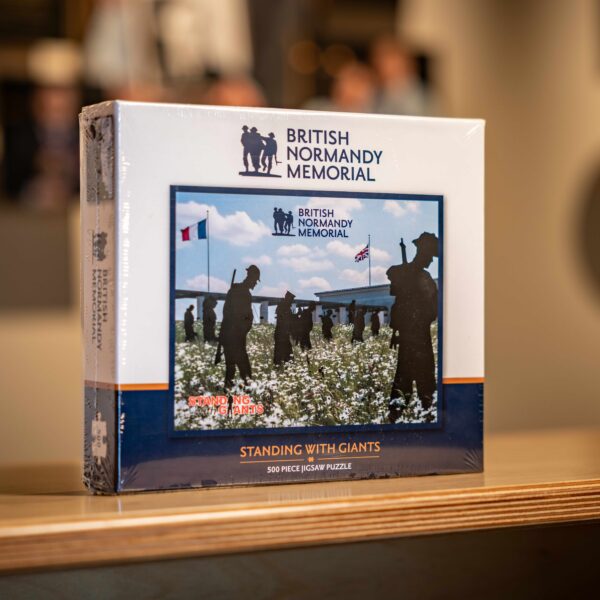
£25
ORDERStanding with Giants Puzzle
Bring a powerful moment of remembrance into your home with our Standing with Giants 500-piece jigsaw puzzle. Featuring the striking silhouettes installation at the British Normandy Memorial, this beautifully produced puzzle captures the scale and emotion of the tribute.
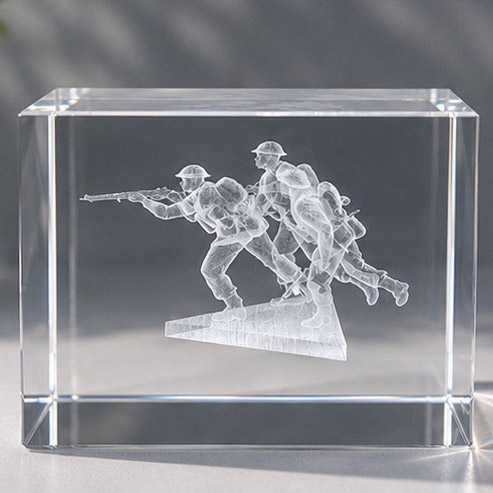
£22
ORDERD-Day Sculpture Crystal Block
Laser-engraved within a solid crystal block, the detailed three-dimensional image can be viewed from different angles, creating a striking display piece.
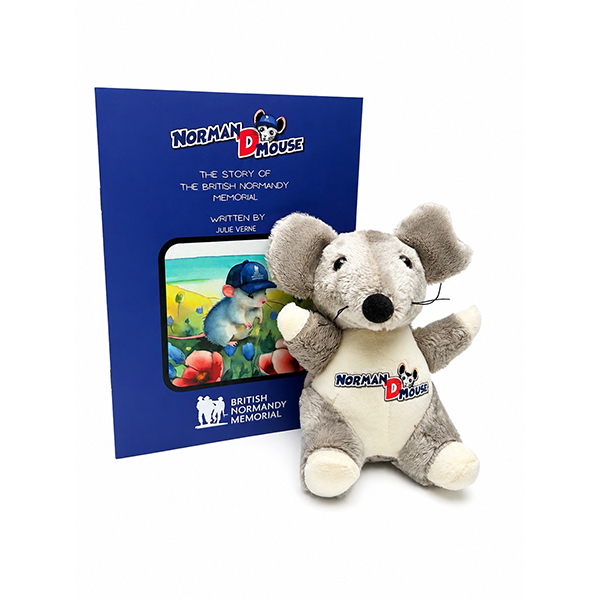
£16.99
ORDERNorman D. Mouse & Book Gift Set
Meet Norman D. Mouse, the little mouse with a very big story to tell!