




Roy Suzuki
This story and photos are shared by the Trust with kind permission from Ali Chaudhry, Second World War Historian based in Dubai, United Arab Emirates.
Lance Corporal Roy Suzuki was born in Southwark, London. The surname Suzuki is of Japanese origin and extremely uncommon in British records of the period. Roy was born to Jukichi Suzuki, from Tokyo, Japan and Mable Ruth Pickering from Southwark, London; the two married on April 20th 1920, in Marylebone. In the 1921 census, they have a son recorded as being 5 months old, Shigehide, making him born in very early 1921. Such backgrounds, while rare, were present in early 20th-century London, particularly in areas connected to trade and migration.
The 1939 Registers tells us that Roy was born on the 13 June 1923, he was an inmate living at 40,42,44,46 King Georges House, Stockwell Road, Stockwell, London and was working as an Armature Winder Apprentice. King George's House was established in 1937 as the King George House home for working boys. It could accommodate up to 200 boys aged 14-18 years and was operated by the Boys' Hostel Association. Later it became a YMCA.
Roy Suzuki served as a Lance Corporal in the Royal Armoured Corps, within the 3rd/4th County of London Yeomanry (Sharpshooters). The regiment was originally a Territorial Army cavalry unit, later converted into an armoured regiment equipped with tanks. During the Second World War, it became part of the famous 7th Armoured Division, known as the “Desert Rats,” one of the British Army’s most experienced and highly regarded formations; known for fighting in tough conditions.
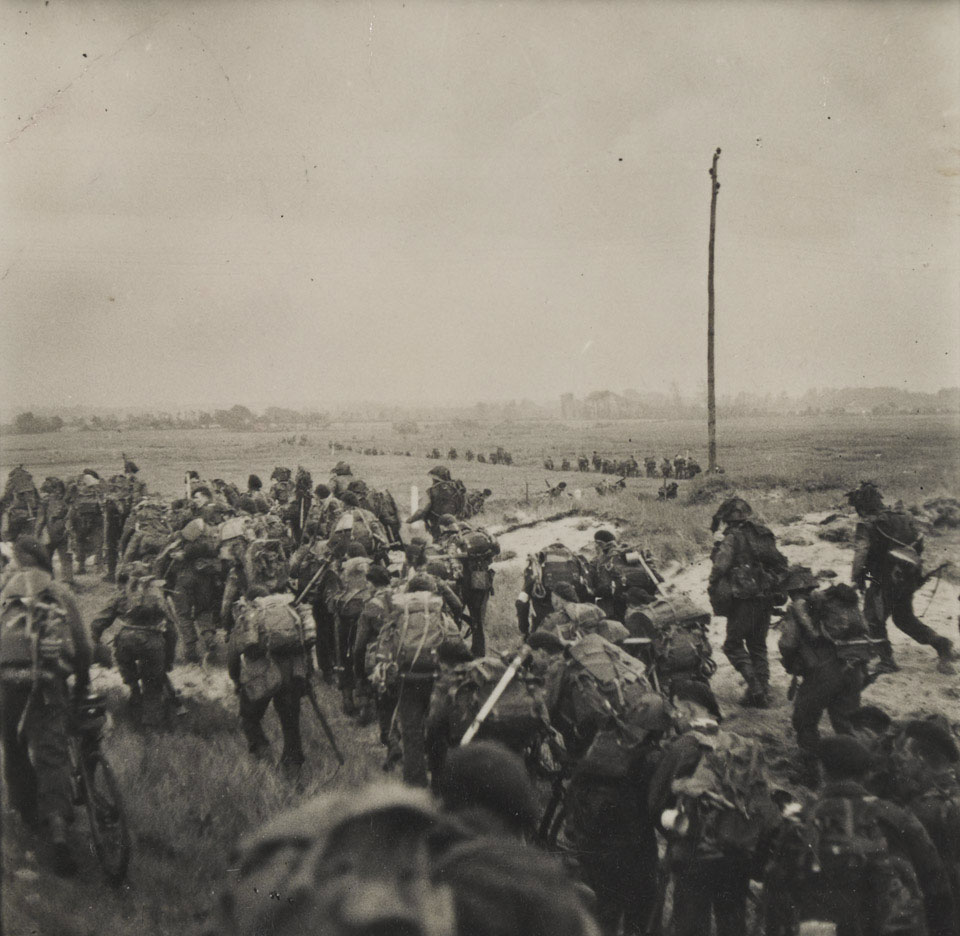
Before taking part in the Normandy campaign, the Sharpshooters had already seen extensive combat service as they were heavily involved in the North African Campaign, including major engagements such as the Second Battle of El Alamein, where British forces successfully pushed back Axis advances. This campaign was a turning point in the war and helped establish the regiment’s reputation. Following their success in North Africa, the regiment gained further operational experience before being deployed to Western Europe in 1944 as part of the Allied invasion force. By this stage, they were a well-trained, experienced unit, used to operating in fast-moving and dangerous combat conditions. In 1944, the 3rd/4th County of London Yeomanry landed in Normandy following the Allied invasion of France on 6 June 1944 (D-Day).
Their role was to support infantry units, engage German armoured forces, and assist in breaking through heavily defended positions. The fighting in Normandy proved extremely difficult due to the terrain and strong German resistance. Fighting in Normandy would prove to be very difficult due to dense hedgerows, known as bocage, which restricted soldiers/tanks movement and visibility, making tank warfare particularly dangerous. German forces were well-equipped with anti-tank weapons, which due to the bocage, were much easier to hide, so tanks were constantly threatened by mines and well-hidden enemies.
Lance Corporal Roy Suzuki was killed on August 18th 1944, during the closing stages of the Battle of the Falaise Pocket. This battle was one of the most decisive operations of the Normandy campaign. Allied forces sought to surround and destroy large numbers of German troops trapped in the area between Falaise, Argentan, and Chambois. To do this, they planned to cut off their escape routes, the allies hoped to stop German forces regrouping. During this period, the 3rd/4th County of London Yeomanry were engaged in advances against retreating German forces, often pushing forward quickly to maintain pressure, blocking key routes and roads to prevent withdrawal.
The fighting was intense and chaotic. Roads were full with destroyed vehicles, abandoned equipment and retreating troops, while Allied units faced constant threats from artillery fire, mines, and ambushes from German soldiers trying to break out. Even experienced units, like the Sharpshooters, faced heavy risks during these operations. A surviving account based on the regiment’s war diary provides valuable insight into what the 3rd/4th County of London Yeomanry were doing on the day Lance Corporal Roy Suzuki was killed.
On 18 August 1944, the regiment was leading the advance as part of the Battle of the Falaise Pocket. This meant they were at the front of the attack, moving ahead of other units into enemy territory. The diary records that B Squadron (a sub-unit of the regiment, made up of several tanks) began advancing along a road when they encountered German soldiers placing mines. These enemy troops were quickly driven off, allowing the advance to continue. Shortly after, the leading tanks came under fire from anti-tank guns (large guns specifically designed to destroy tanks). Although the first shots did not hit, the advance was slowed as another troop attempted to move around the enemy position but was also held up by similar fire. The terrain was described as too “close” for proper deployment, meaning the hedgerows, trees, and narrow lanes prevented tanks from spreading out safely. This made them easier targets.
In response, the regiment used smoke shells to block the enemy’s view and allow their tanks to move forward. While the exact moment of Lance Corporal Suzuki’s death is not recorded, this war diary evidence strongly suggests that he was killed during a forward advance under enemy fire, a close-range engagement with anti-tank weapons, a dangerous push through terrain where tanks were vulnerable. Being a Lance Corporal, Roy Suzuki had a position of responsibility within his unit. This role often involved, assisting in the command and coordination of a tank crew, maintaining discipline and communication within the troop and supporting operational effectiveness during combat. Tank crews relied heavily on coordination and trust, and the loss of any crew member could have serious consequences for the unit.
This entry shows that on the day Roy Suzuki died his regiment was at the very front of the fighting and under direct fire from enemy hidden guns. When tanks were hit, the chances of survival were often low. Casualty rates were particularly high during the Normandy campaign due to the intensity of the fighting and the nature of the terrain. Roy Suzuki was listed as ‘Missing believed killed”. He was just 23 years old when he lost his life in Normandy. Like many soldiers of his generation, he served far from home in difficult and dangerous conditions. His death came during one of the most decisive battles of the campaign.
Today, he is buried in Normandy, among those who fell in the same fighting. His story, though only partially known, represents the sacrifice made by so many during the war.
British Normandy Memorial - Additional Information
Unfortunately, we do not have a photo of Roy Suzuki. If you are aware of one, or you are related to Roy, we would love to hear from you so we can add to his story.
FALLEN HEROES
ROY SUZUKI
Army • LANCE CORPORAL
Royal Armoured Corps
3rd/4th County of London Yeomanry (Sharpshooters)DIED | 18 August 1944
AGE | 23
SERVICE NO. | 5958215
FALLEN HEROES
ROY SUZUKI
Army • LANCE CORPORAL
Royal Armoured Corps
3rd/4th County of London Yeomanry (Sharpshooters)DIED | 18 August 1944
AGE | 23
SERVICE NO. | 5958215
FEATURED SHOP ITEM
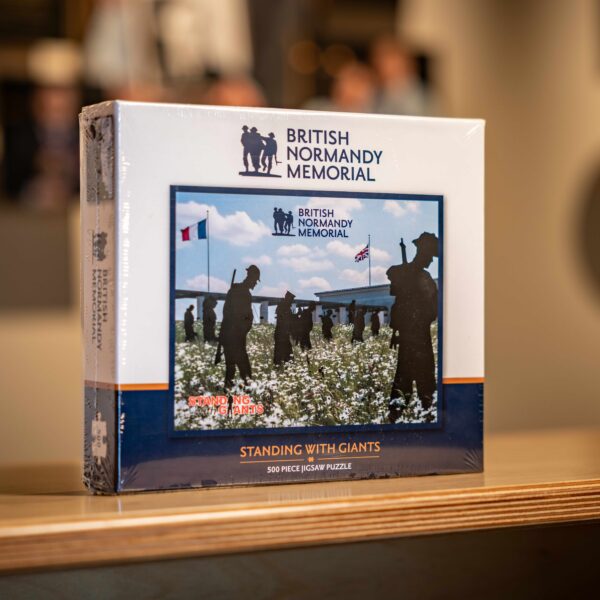
£25
ORDERStanding with Giants Puzzle
Bring a powerful moment of remembrance into your home with our Standing with Giants 500-piece jigsaw puzzle. Featuring the striking silhouettes installation at the British Normandy Memorial, this beautifully produced puzzle captures the scale and emotion of the tribute.
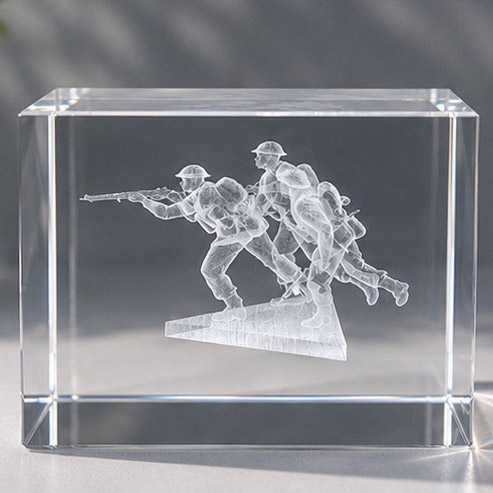
£22
ORDERD-Day Sculpture Crystal Block
Laser-engraved within a solid crystal block, the detailed three-dimensional image can be viewed from different angles, creating a striking display piece.

£16.99
ORDERNorman D. Mouse & Book Gift Set
Meet Norman D. Mouse, the little mouse with a very big story to tell!